
Plants · My garden in Bran, Romania
The hydrangeas in my mountain garden
Five common groups and how to care for them
In photos of my garden, the hydrangeas show up in pink, white and lilac, with flowers that are sometimes round, sometimes cone-shaped or lacy. It’s easy to see them as the same plant in different colors. For care, though, the name matters: some keep the buds for next year’s flowers over winter, while others bloom on stems grown that same year.
I’m starting with this overview to tell the main groups apart and understand what changes from one to the next. The details of each plant will follow in individual profiles.
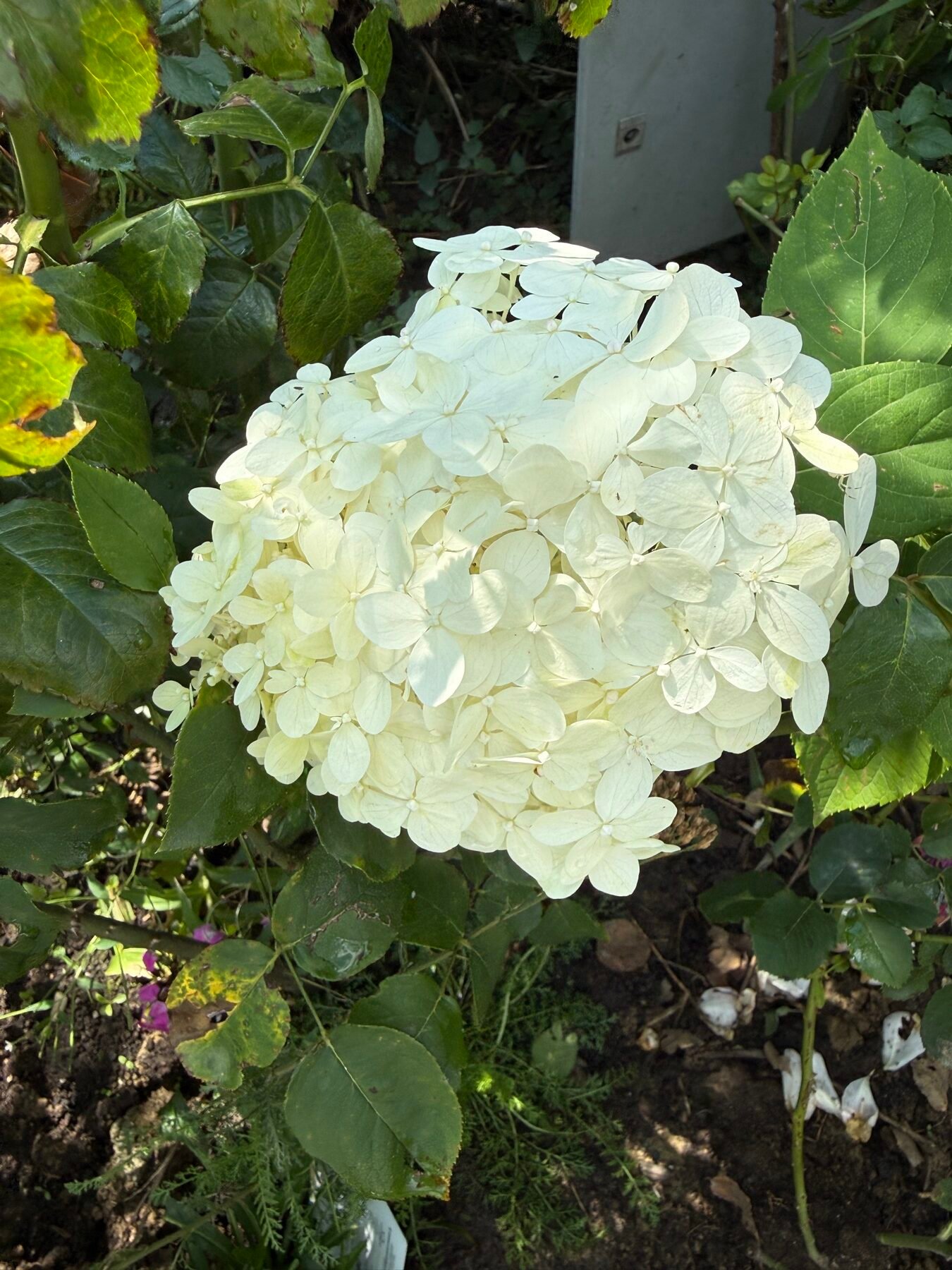
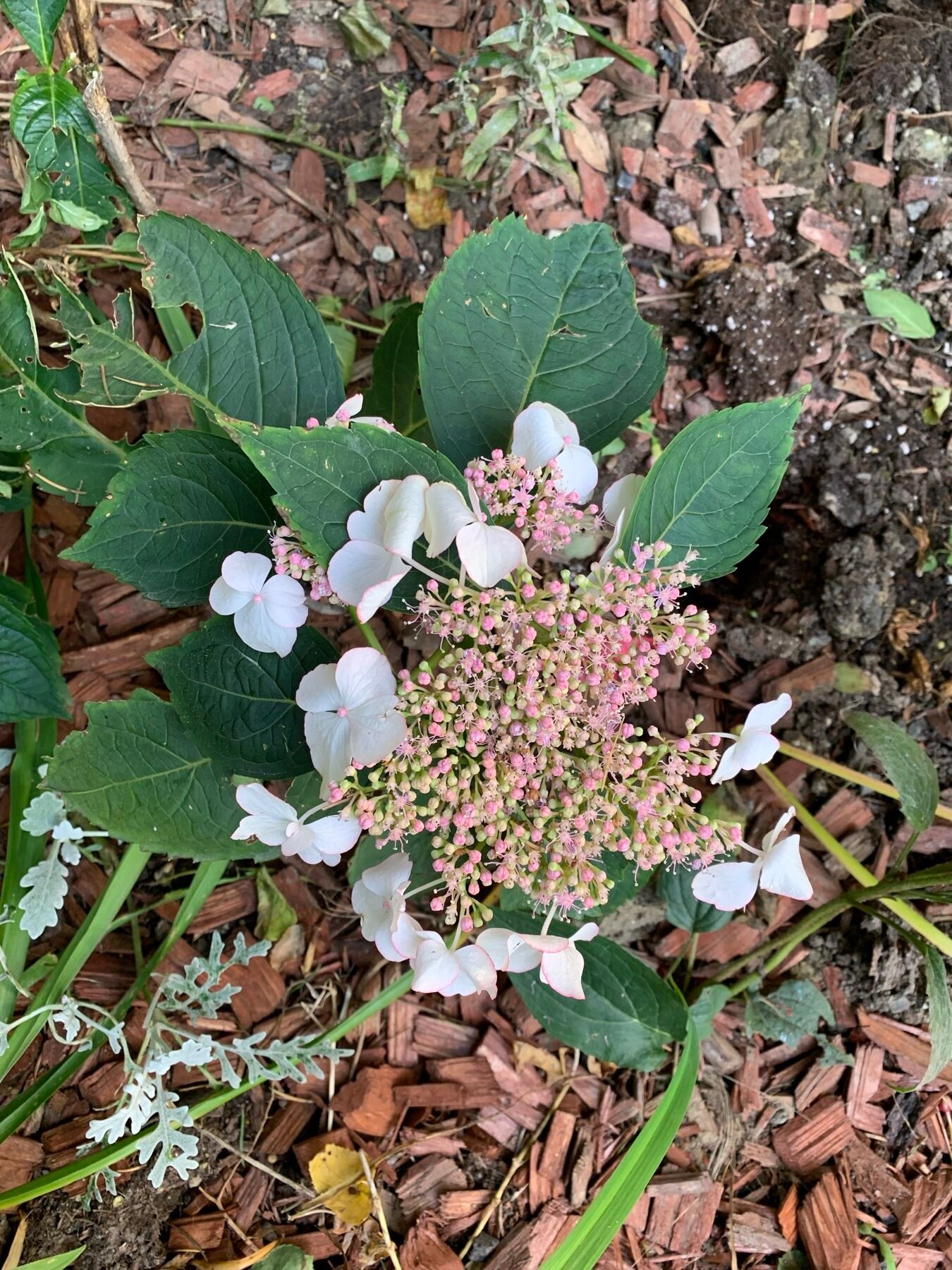
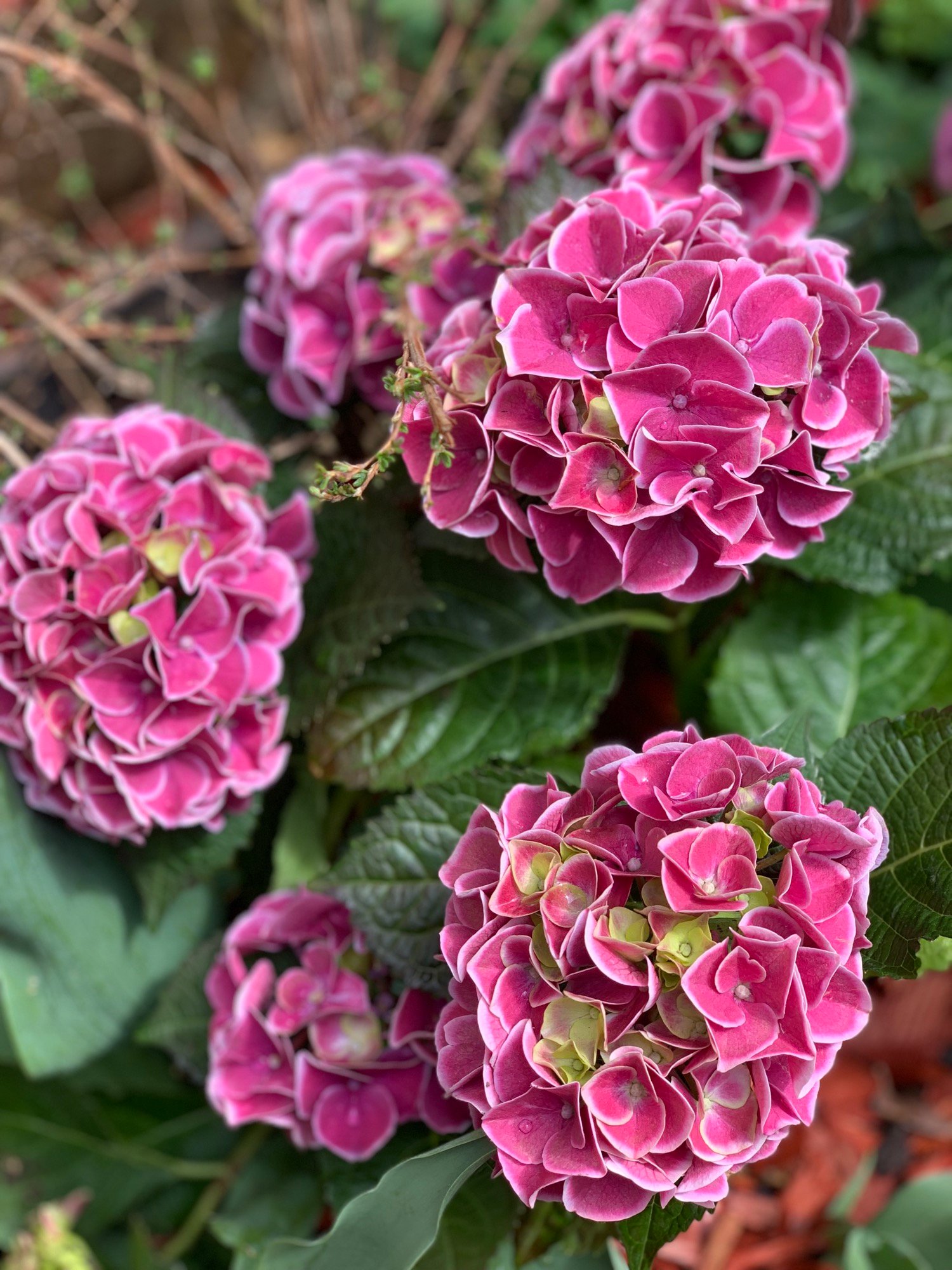
Round pink flower head · cone-shaped creamy white flower head · lacecap flower head, with small flowers in the center and large flowers around the edge. From my garden in Bran.
Five groups worth telling apart
On a phone, swipe the table to the left.
| Hydrangea type | How to recognize it | Light and the right spot | Blooms on | Cold hardiness and how it does in Bran |
|---|---|---|---|---|
| H. macrophylla | Round or lacecap flowers | Bright part shade and protection from hot afternoon sun | Old wood (reblooming varieties on new wood too) | Zones 6–9; in Bran it doesn’t bloom every year |
| H. paniculata | Cone-shaped flower heads | Sun or part shade; don’t let the soil dry out too much | New wood | Zones 3–8; very hardy in Bran |
| H. arborescens | Often white balls; pink or lacecap varieties also exist | Part shade; in sun it needs steady moisture | New wood | Zones 3–9; very hardy in Bran |
| H. quercifolia | Lobed leaves and cone-shaped flowers | Gentle sun or part shade; good drainage | Old wood | Zones 5–9; very hardy in Bran |
| H. petiolaris | Climbing habit and white lacy flowers | Shade or part shade; sturdy support and room to grow | Old wood | Zones 4–8 |
These are five common groups, not the whole diversity of the genus. The hardiness zones are approximate and come from the botanical profiles in the bibliography; they don’t replace observation in your own garden, which matters more in Bran.
How the five groups differ
01
Hydrangea macrophylla
The bigleaf hydrangea can have full, round flower heads (mophead) or flat ones (lacecap), with small flowers in the center and larger decorative flowers around the edge. It prefers filtered light or morning sun and protection from hot afternoon sun. Many varieties bloom on last year’s wood. There are also reblooming varieties that can flower on new growth, but you have to check the label for that. A general trim in fall can remove the flower buds of an ordinary variety. In Bran it doesn’t bloom every year, even with all the protection: winter and late frosts decide, and the outcome largely comes down to luck. That’s why I wouldn’t choose it as the first hydrangea for a garden. [2, 7]
02
Hydrangea paniculata
You can recognize it by its cone-shaped or pyramidal flower heads. In many varieties, the white or creamy green at the start takes on pink tones as the flowers age. It handles sun better than many other hydrangeas, as long as there’s enough water in the soil. It’s a cold-hardy species and blooms on the current year’s growth. Shaping cuts are done toward the end of dormancy, before active growth begins. ‘Limelight’ and ‘Renhy’ (Vanille Fraise®) are two well-known examples, each with its own look and size. Also called panicle hydrangea. It does very well in Bran. [3, 8]
03
Hydrangea arborescens
‘Annabelle’ is a well-known example for its large white balls, but the species also includes forms with airier flower heads, and some cultivars have pink flowers. It blooms on new wood and is quite cold-hardy. It’s happy in part shade, in moist, well-drained soil. In sun, a steady water supply becomes important; I wouldn’t describe it as a plant for dry spots. The heavy flower heads can bend the stems after rain. Since it blooms on new wood, it can be cut back hard in late winter. It does very well in Bran. Also called smooth hydrangea. [4]
04
Hydrangea quercifolia
The lobed, oak-like leaves are the easiest feature to spot. In fall they can take on red and purple tones. The flowers are grouped in cone-shaped heads, white at first, that can turn pink as they age. It prefers soil rich in organic matter and well-drained, in gentle sun or part shade. It blooms on old wood: if it needs cutting back, do it after flowering, not with a general spring trim. It does very well in Bran. Also called oakleaf hydrangea. [5]
05
Hydrangea petiolaris
The climbing hydrangea is also often listed under the name Hydrangea anomala subsp. petiolaris. It has white, lacy flowers and clings with adhesive aerial roots, not suction pads. It suits shaded or partly sunny surfaces. It can start slowly, then become vigorous and heavy, so the support has to be chosen from the start for a mature plant. It doesn’t need hard yearly pruning; overly long shoots can be shortened after flowering. [6]
And a related group
Hydrangea serrata
The mountain hydrangea from Japan and Korea looks like macrophylla but is smaller and more delicate, with finer leaves and usually flat (lacecap) flower heads. Its flower color responds to pH just like macrophylla. Most varieties bloom on old wood, so they’re trimmed after flowering, only if needed. It’s often described as somewhat hardier than macrophylla, but for Bran I’d try it with the same precautions and check the variety’s hardiness zone. I don’t have it in the garden, so I can’t yet say how it behaves here.
Care starts with the right spot
Before planting, I check the light, how the water drains and the space the mature shrub will take up. I plant them in spring or in September, so the roots settle in before the frost; in the mountains, planting in late fall is risky. The soil shouldn’t be frozen or waterlogged. I keep the same planting depth as in the pot and water to settle the soil around the roots. Mulch helps hold in moisture, without being piled against the stems. Watering is adjusted to the soil and the weather, not to the same amount for every hydrangea. [1]
Watering and feeding
Hydrangeas have shallow roots and suffer when the soil dries out, especially in the first year after planting and for varieties exposed to sun. A layer of mulch and watering as needed, depending on the weather, do more than a rigid schedule. Feeding can be moderate: a slow-release fertilizer in spring is enough. I avoid nitrogen toward the end of summer, because it pushes soft growth that doesn’t have time to harden before winter.
Why the flower color changes
In the macrophylla and serrata varieties that respond this way, acidic soil makes aluminum more available and can support blue tones. In less acidic or alkaline conditions, the same plants can have purple or pink flowers. But the effect depends on the cultivar and the soil chemistry. White hydrangeas don’t automatically turn blue when you acidify. Nor should the pink that appears on paniculata as the flowers mature be confused with this mechanism. As a rough guide, blue tones need a pH of about 5.5 or lower, and pink shows up toward 6.5 or higher; between the two, flowers can be purple. In a container the change is easier to control than in the ground. Before amending, I measure the pH and check the variety’s needs. [1, 3]
Before pruning, I identify the plant
Old wood is growth kept from previous years; new wood is what forms in the current season. Paniculata and arborescens bloom on new wood. Macrophylla, quercifolia and the climbing hydrangea keep flower buds on old wood; in macrophylla, reblooming varieties can also flower on new wood. If I’m not sure of the identification, I avoid cutting back hard. Removing a dry flower head isn’t the same as reshaping the whole shrub. [7]
Pruning calendar at a glance
On a phone, swipe the table to the left.
| Hydrangea type | When | How |
|---|---|---|
| H. macrophylla | After flowering; in late spring, only dead wood | Spent flower heads and clearly dead wood; no general trim on ordinary varieties |
| H. paniculata | Late winter, before growth starts | Shaping cuts; shorten the previous year’s growth |
| H. arborescens | Late winter | Can be cut back hard |
| H. quercifolia | After flowering, only if needed | Whole stems, not trimming; don’t cut back in spring |
| H. petiolaris | After flowering | Only overly long shoots |
In the mountains, bud survival matters too
A hydrangea can survive winter and still bloom poorly if the flower buds were damaged by cold. For Bran, choosing the variety and a spot sheltered from cold drafts is just as important as the beauty of the flower. In spring, a warm day doesn’t mean the frosts are over. With macrophylla, I wait until I can tell which growth is alive before deciding what to remove. Not every stem that looks dry at first glance is lost. [9]
What works for me in Bran
From my observations, Hydrangea paniculata, H. arborescens and H. quercifolia do very well in Bran and bloom year after year. H. macrophylla is different: it doesn’t bloom every year, even with all the protection, and the outcome largely comes down to luck — how the winter goes and the late frosts. If you’re just starting out, I’d choose the first three.
For macrophylla, what still helps: a spot sheltered from cold drafts, thick mulch at the base in fall, a light covering of leaves or frost cloth (not plastic), and in spring, patience until you can see where the buds are starting.
Pests and diseases
My hydrangeas are very tough. Leaf spot appears very rarely, and the plants get the same plant-protection treatments as the roses, nothing special. Problems that can generally show up are powdery mildew, leaf spot and aphids.
Toxicity
Hydrangea leaves, buds and flowers contain cyanogenic compounds and are mildly toxic if eaten. In dogs and cats they can cause vomiting, diarrhea and lethargy; in large amounts, symptoms can be more serious. If you have pets that nibble plants or small children, plant them out of reach and call your vet or doctor if a larger amount has been eaten.
For me, the name of a hydrangea becomes practical information. It tells me which stems to keep and what kind of spot to look for. From here I can start the profiles of each type, with photos and observations about the plants in the garden.
Further reading
[1] RHS — Growing shrubby hydrangeas
[2] NC State Extension — Hydrangea macrophylla
[3] NC State Extension — Hydrangea paniculata
[4] NC State Extension — Hydrangea arborescens
[5] NC State Extension — Hydrangea quercifolia
[6] RHS — Growing climbing hydrangeas
[7] University of Maryland Extension — Pruning hydrangeas
[8] RHS — Hydrangea paniculata Vanille Fraise
[9] University of New Hampshire Extension — Pruning and winter-damaged buds