
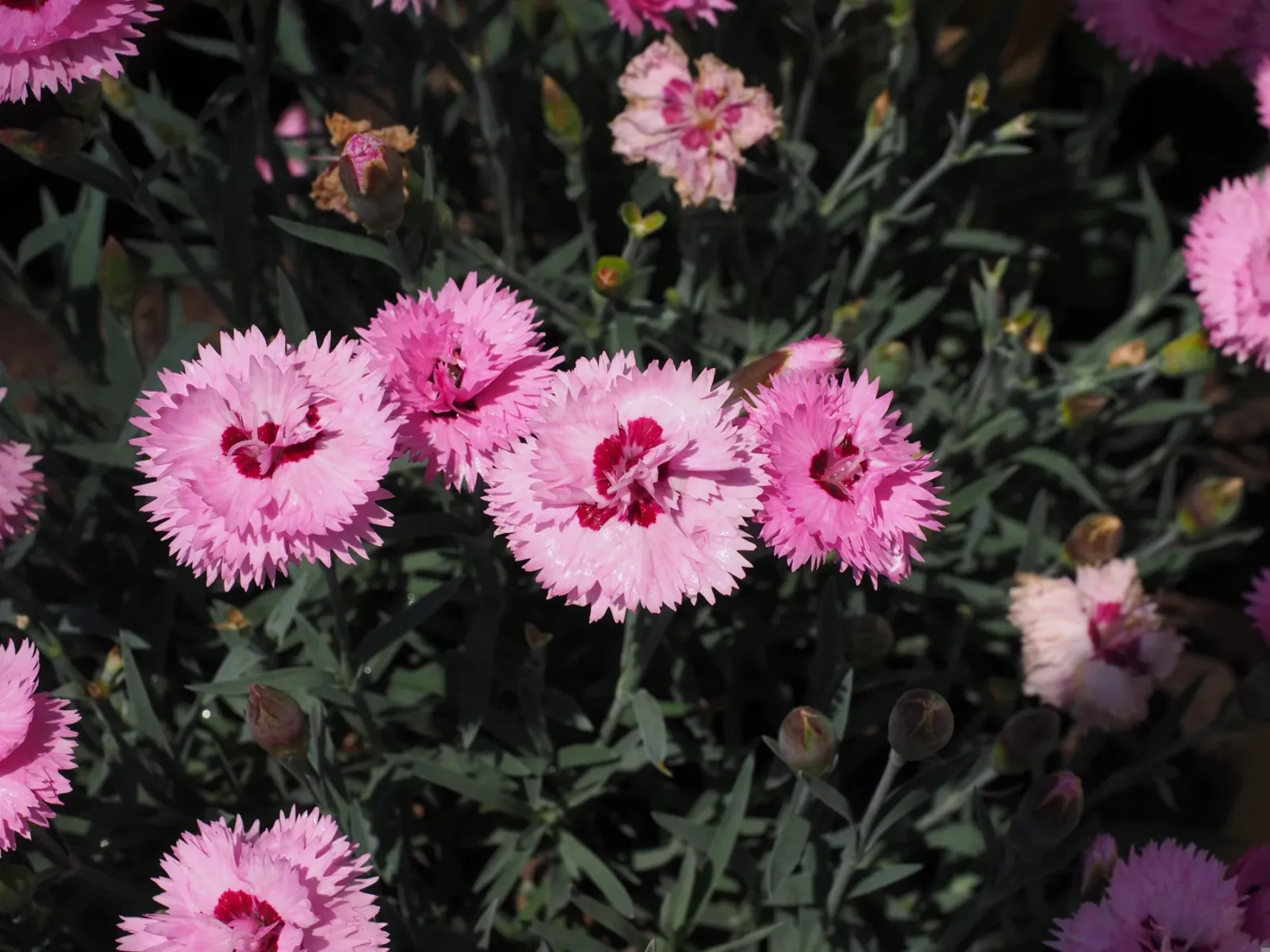
Plant profile
Garden pinks
Dianthus · garden pinks and China pinks
Fringed flowers, clumps that return and lasting colour in my mountain garden.
Observed in Bran
Repeat flowering
Agrosem seeds
Why I keep them in my garden
Small flowers, plenty of colour
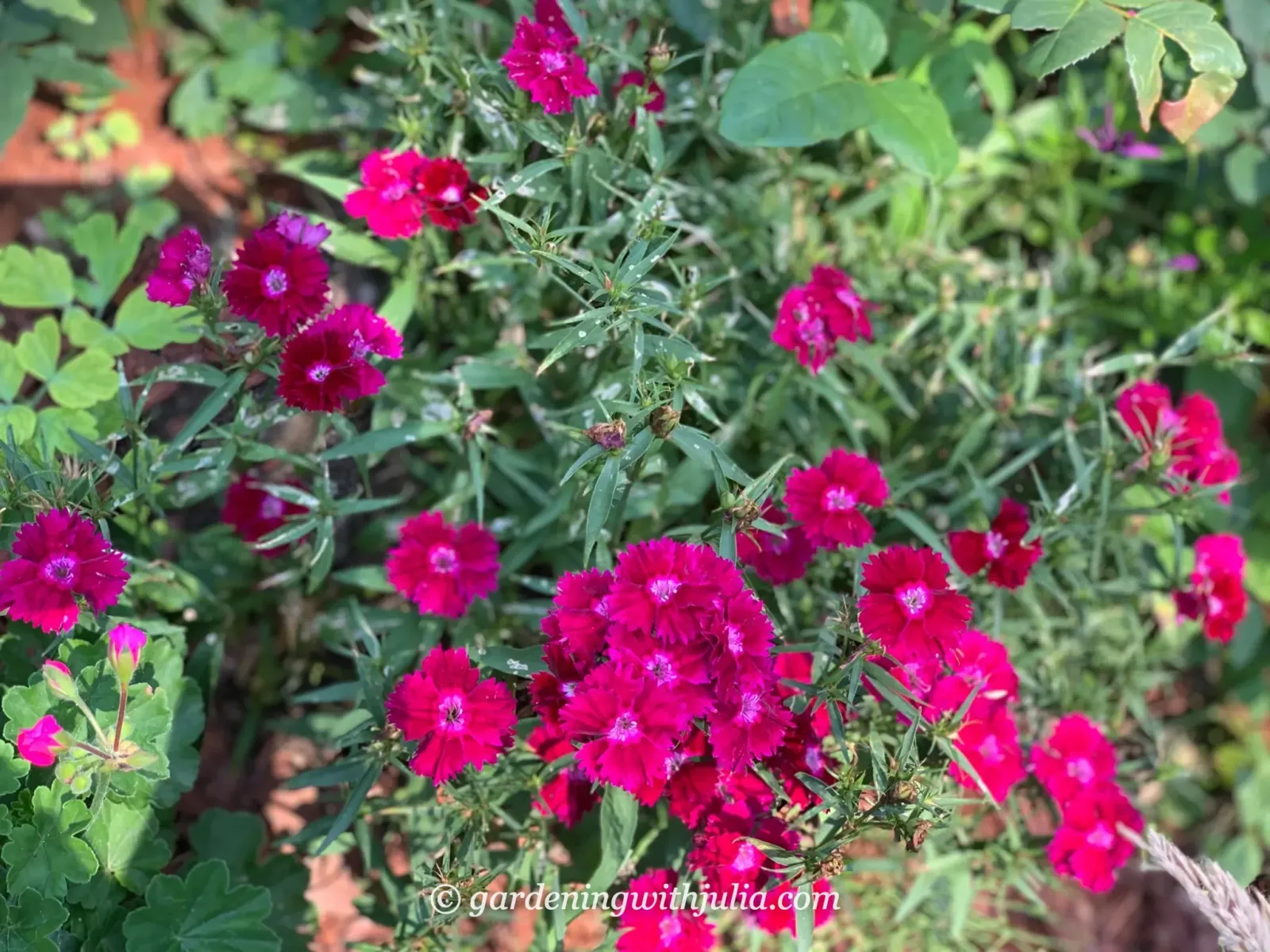
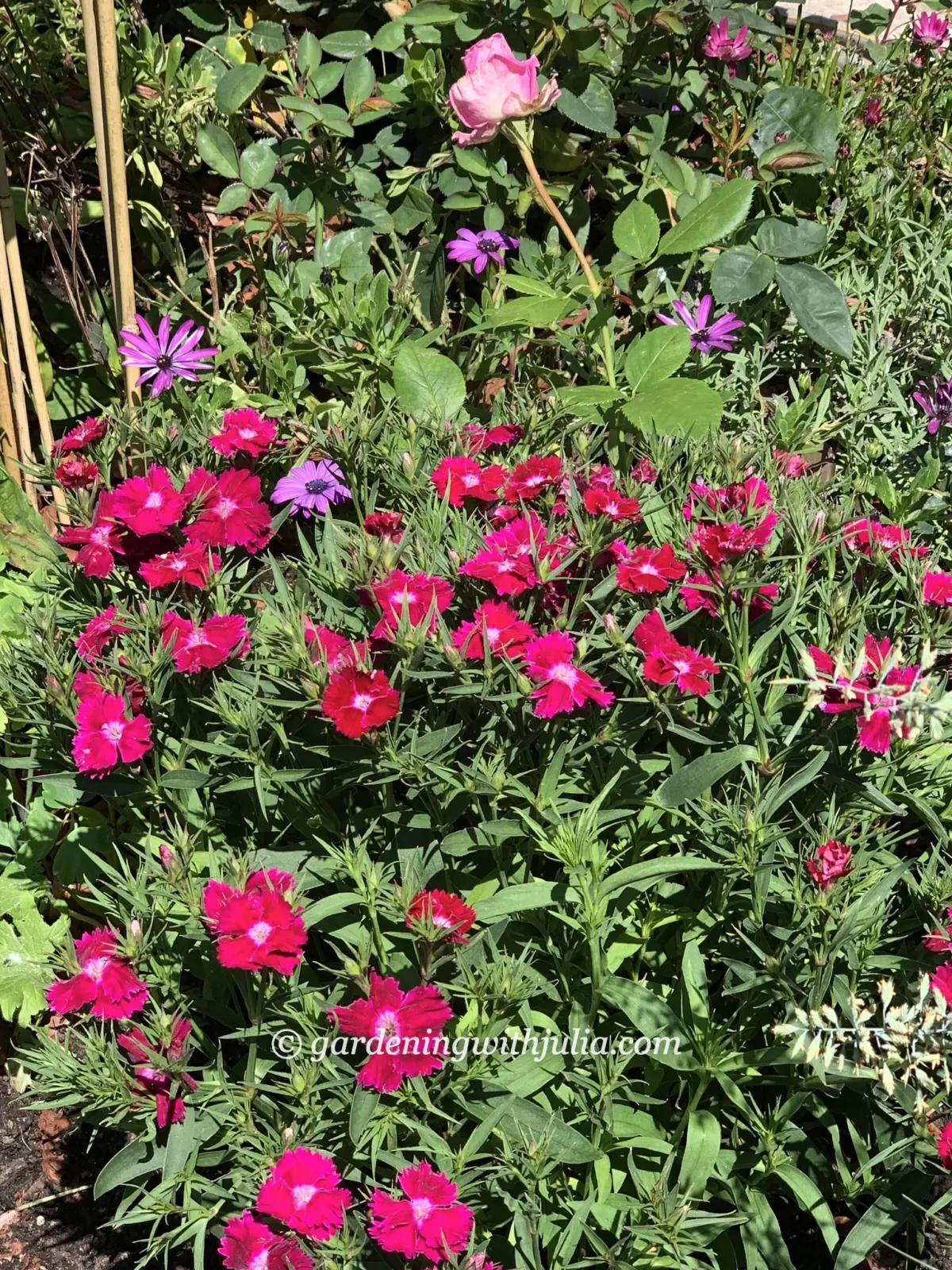
Pinks reward a closer look: fringed petals, pale edges and contrasts of pink, red and burgundy. My garden photographs show just how varied they can be, even though I gather them all under the same name.
They do very well in Bran. Flowering begins in May or June and continues into November, with excellent repeat flowering and, in my experience, very few problems with disease. Drainage matters most: they dislike soil that stays too wet.
My garden includes both plants I bought and China pinks grown from Agrosem seeds. The bought plants come back after winter; the China pinks usually return too, although I lose some in years with severe frost.
One family, several types. This is the profile of my garden pinks. Sweet William, Dianthus barbatus, has its own page.
Garden essentials
Quick facts
Genus
Dianthus
Family
Caryophyllaceae
In my garden
Bought plants and seed-grown China pinks
China pinks
Dianthus chinensis
Cultivars
—
Source
Hornbach, Brico Dépôt; Agrosem seeds
Light in Bran
Sun and partial shade, beneath roses
Soil
Well drained; no standing water
Colour
Pink, red, burgundy and bicolour
Flowering in Bran
From May or June until November
Overwintering
Clumps return; China pinks can suffer in harsh winters
Health in Bran
Very good in my garden conditions
China pinks
Grown from Agrosem seeds
I also raise China pinks from seed. They flower in their first year, adding to the clumps already growing in my garden.
I follow the packet instructions for the seed mixture I have bought. Once they emerge, seedlings need light and a moist growing medium without excess water. Before planting out, they are gradually hardened off to outdoor conditions.
China pinks are described as biennials or short-lived perennials, often grown as annuals. Mine can return, but I do not count on the same survival rate every winter. About Dianthus chinensis — NC State Extension.
Growing in cold areas
Hardy in Bran, with well-drained roots
Seeing the clumps return after winter is one reason I keep them in my garden. There are differences between the types, though.
What I have observed
Bought plants
Return after winter
China pinks
Usually return
Winters with severe frost
Some China pinks may be lost
Disease resistance
Very good in my garden
Excess moisture
They dislike it
Observations from my garden
These results describe my plants and the places where they grow. Not all pinks have the same tolerance of cold.
In my mountain garden
My experience — Bran, Romania
I bought the plants at Hornbach and Brico Dépôt. I no longer know their cultivar names, but I recognise them by their flowers and watch how they return from one season to the next.
| China pinks | Seedlings grown from Agrosem seeds |
| Position | Sun and partial shade, beneath roses |
| Flowering | May or June until November |
| Repeat flowering | Very good |
| Faded flowers | I remove them |
| Disease | Very few problems |
| Waterlogged soil | Avoid |
The rhythm of flowering
Flowers that keep coming back
For me, repeat flowering is one of the loveliest things about these plants. I remove faded flowers to encourage another flush.
After the first flush
Repeat flowering means the plant produces new flowers after its main flush. Each clump has its own rhythm, and the weather can change the length of the gaps between flushes.
In my garden: flowering starts in May or June and continues until November, with a very good repeat display after the first flush.
Care: I remove faded flowers while keeping healthy buds and shoots.
General guidance: trim a spent flower stem back to the next bud or side shoot.
Spring
Check the clumps
Check the plants that have returned and remove completely dead growth.
Summer
I remove faded flowers
I keep new buds and watch how quickly the next flush begins.
Autumn
Keep clumps clear
Fallen leaves should not form a wet mat over the centre of the plant.
Winter
Drainage comes first
Water must be able to drain away. Severe frost remains a risk for China pinks here.
Light, soil and water
The right spot makes a difference
My observation is simple: pinks are resilient, but persistent wetness can cause problems.
☼ Light
In my garden they grow in both sunny spots and partial shade, beneath roses. Sun is the general recommendation for growing pinks; my observations in Bran describe how they perform in the places where I have planted them.
⌁ Water
Good drainage does not mean no water at all. Newly planted pinks need watering while they establish; after that, watering depends on the soil and weather.
♧ Drainage
If water collects after rain, a raised bed or a container with freely draining holes is a better choice. Keep the crown at the same depth as it was in the pot.
Propagation
New seedlings and returning clumps
The two sources complement each other in my collection: bought plants and China pinks I have grown from seed.
Agrosem seeds
This is the method I use for China pinks. Mine flower in their very first year.
Clumps that return
I keep the bought plants that survive winter and flower again. Not knowing the cultivar does not stop me from observing how they perform.
Cuttings from perennial pinks
As a general method, cuttings can be taken from non-flowering shoots in summer. It is an option for preserving a favourite plant, separate from my own experience of growing from seed.
Plant health and biodiversity
Disease and pollinators
In my garden they have been very resistant to disease. Good drainage remains essential to this positive experience.
What to watch for
China pinks can develop crown rot and rust. Slugs can damage plants, especially in overly shady spots. If a plant starts to wilt, I check the base of the clump and its leaves.
Good results in my garden do not mean the species cannot suffer from disease. I identify the problem before choosing a treatment.
Flowers and pollinators
China pinks can attract bees and butterflies. Flower shape matters: very double flowers can make nectar and pollen harder to reach. I have not measured insect visits to the plants in these photographs.
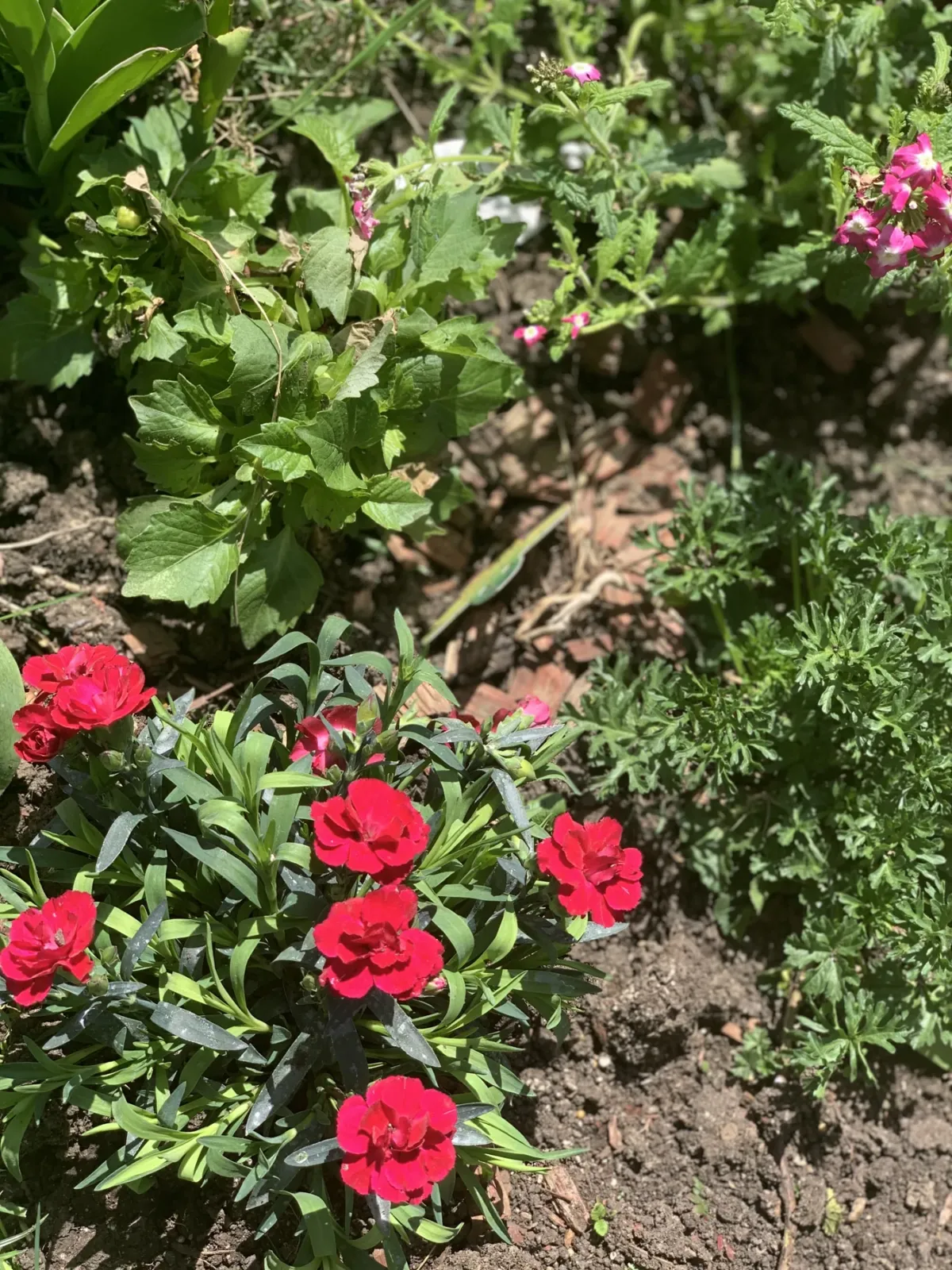
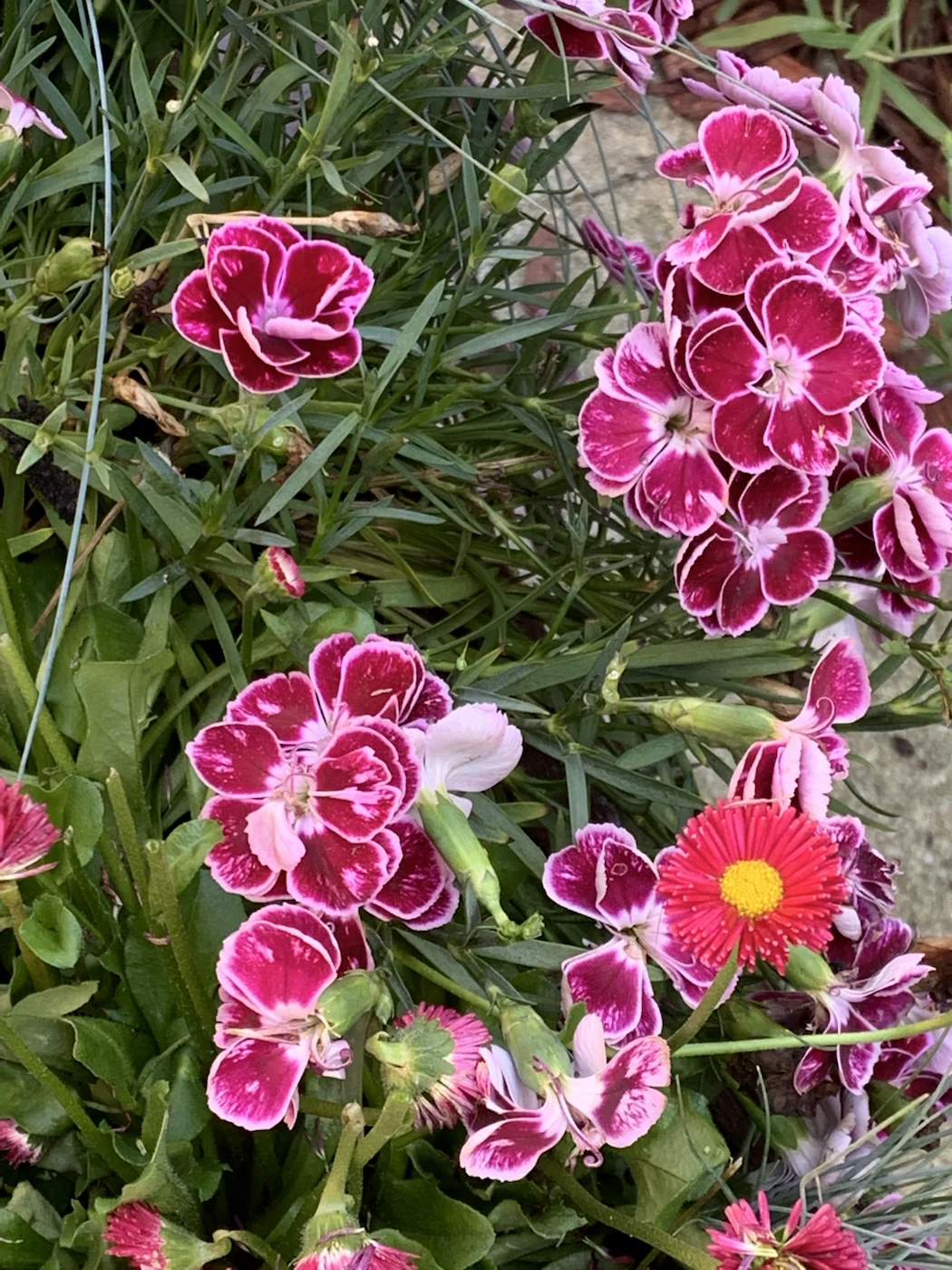
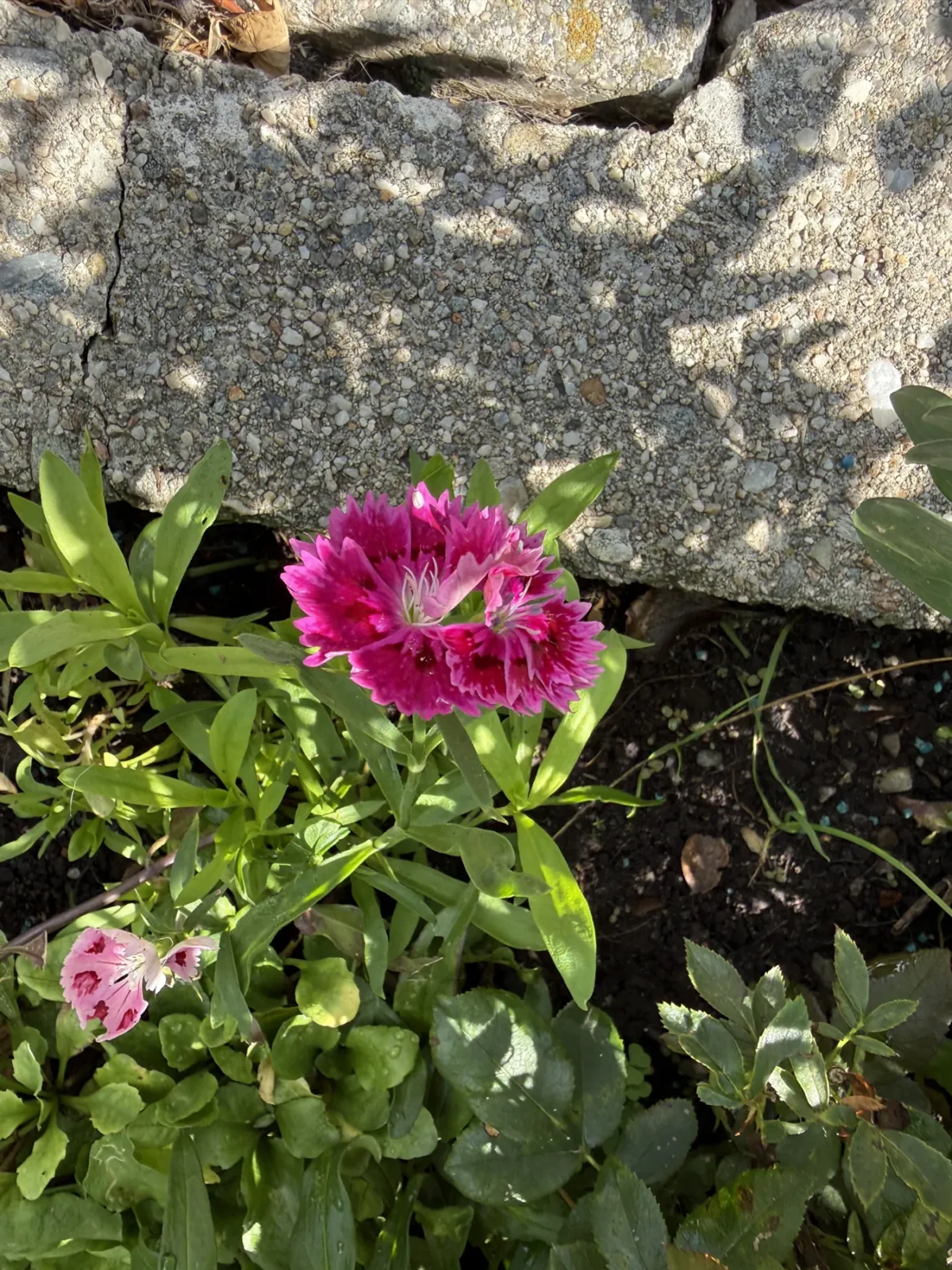
The photographs show different plants from the same collection; flower colour and shape alone are not enough to assign a cultivar name.
Visual journal
My pinks — colours and shapes
Photographs from my garden in Bran: pink, red and bicoloured flowers, with single or fuller blooms.
Explore more of the garden
Guides to complement the care of garden pinks.
Sources
Botanical information
RHS — growing dianthus
Light, drainage, deadheading and cuttings
NC State Extension — Dianthus chinensis
Life cycle, growing conditions and possible problems
RHS — plants and pollinators
Flower shape and access for insects
The observations on overwintering, disease, seeds and repeat flowering come from my own garden. The cultivar names of the bought plants are unknown.
My verdict
They have a place in my garden
For colour and repeat flowering
Strength
Repeat flowering
Bought plants
Return after winter
China pinks
Sometimes lost to severe frost
Essential condition
Good drainage
These plants have given me plenty of flowers and very few problems. I keep watching them, clump by clump, in the conditions of my mountain garden.