
Plants · My garden in Bran, Romania
The chrysanthemums in my mountain garden
Fall garden mums: groups, flower forms and care
Toward the end of fall, when the rest of the garden is saying goodbye, chrysanthemums bring a splash of color right up to the first hard frosts, in lovely shades of pale pink, cyclamen, red or magenta. In my garden they’ve proved hardy, and they’re very easy to propagate from cuttings. They do have their weak spots, though: slugs love them, and many varieties are prone to powdery mildew and rust.
I’ll start with an overview of what you’ll find at markets and garden centers, how to tell them apart by their flowers, and what I actually do to get them safely through the winter.
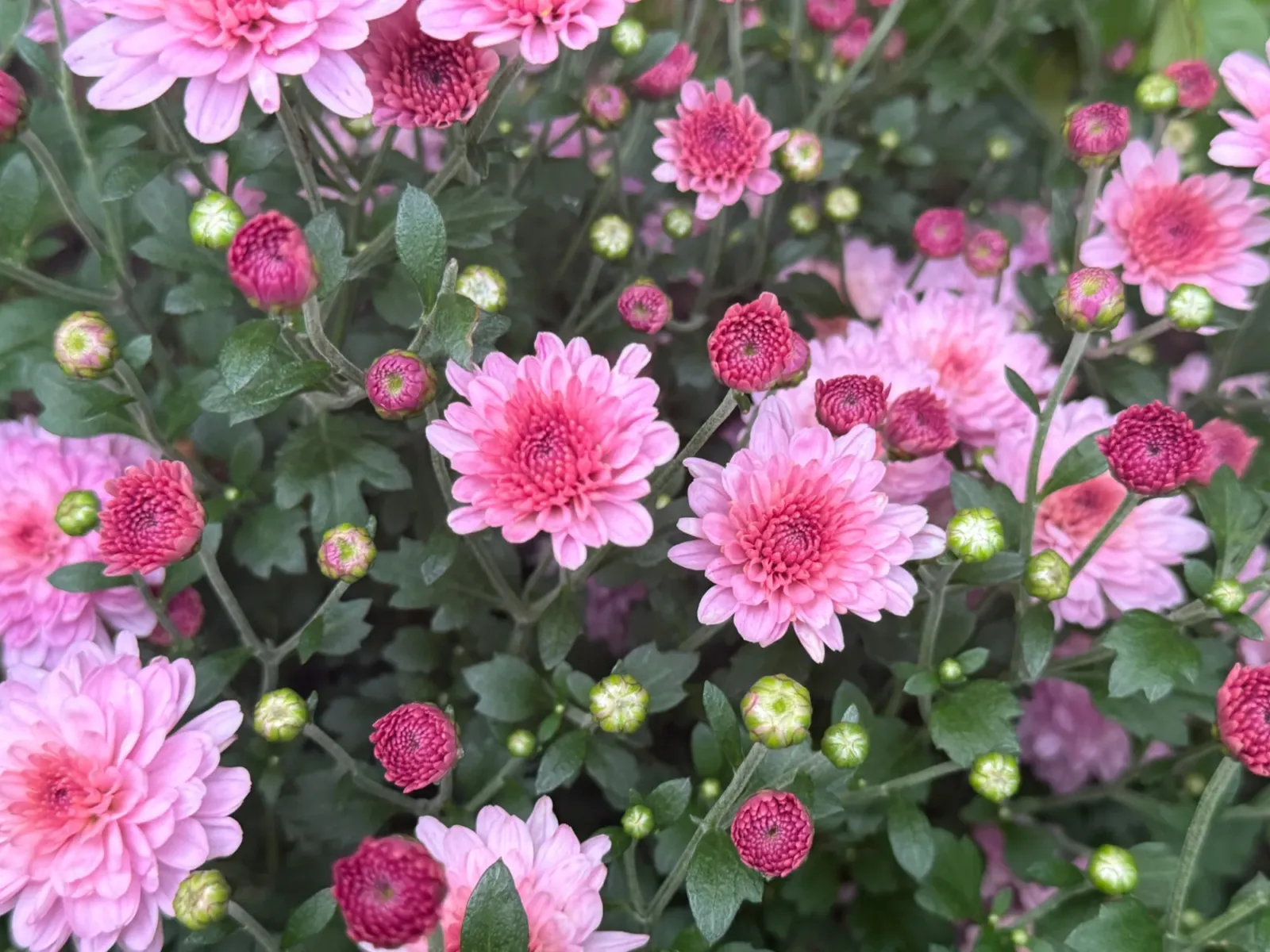
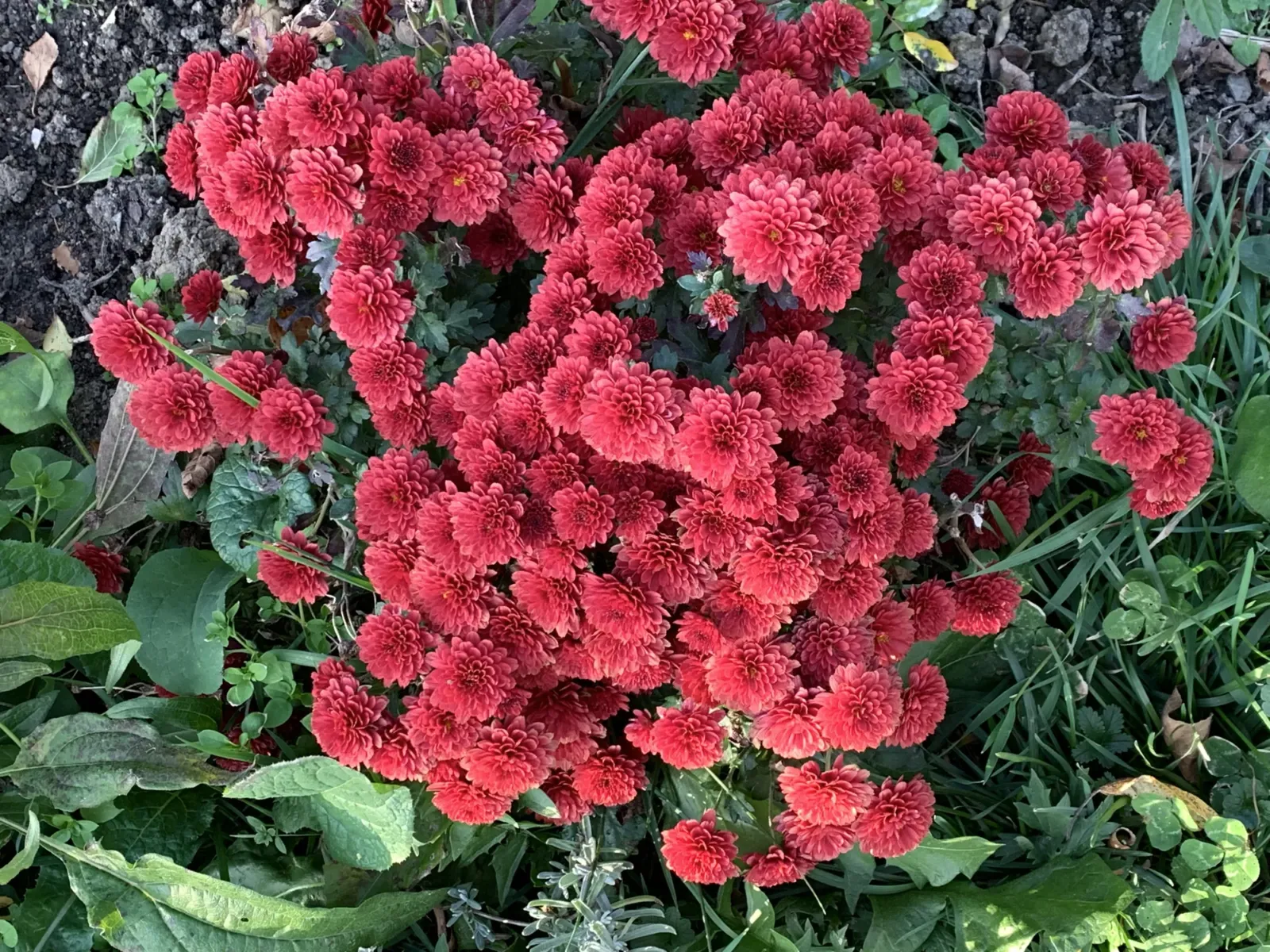
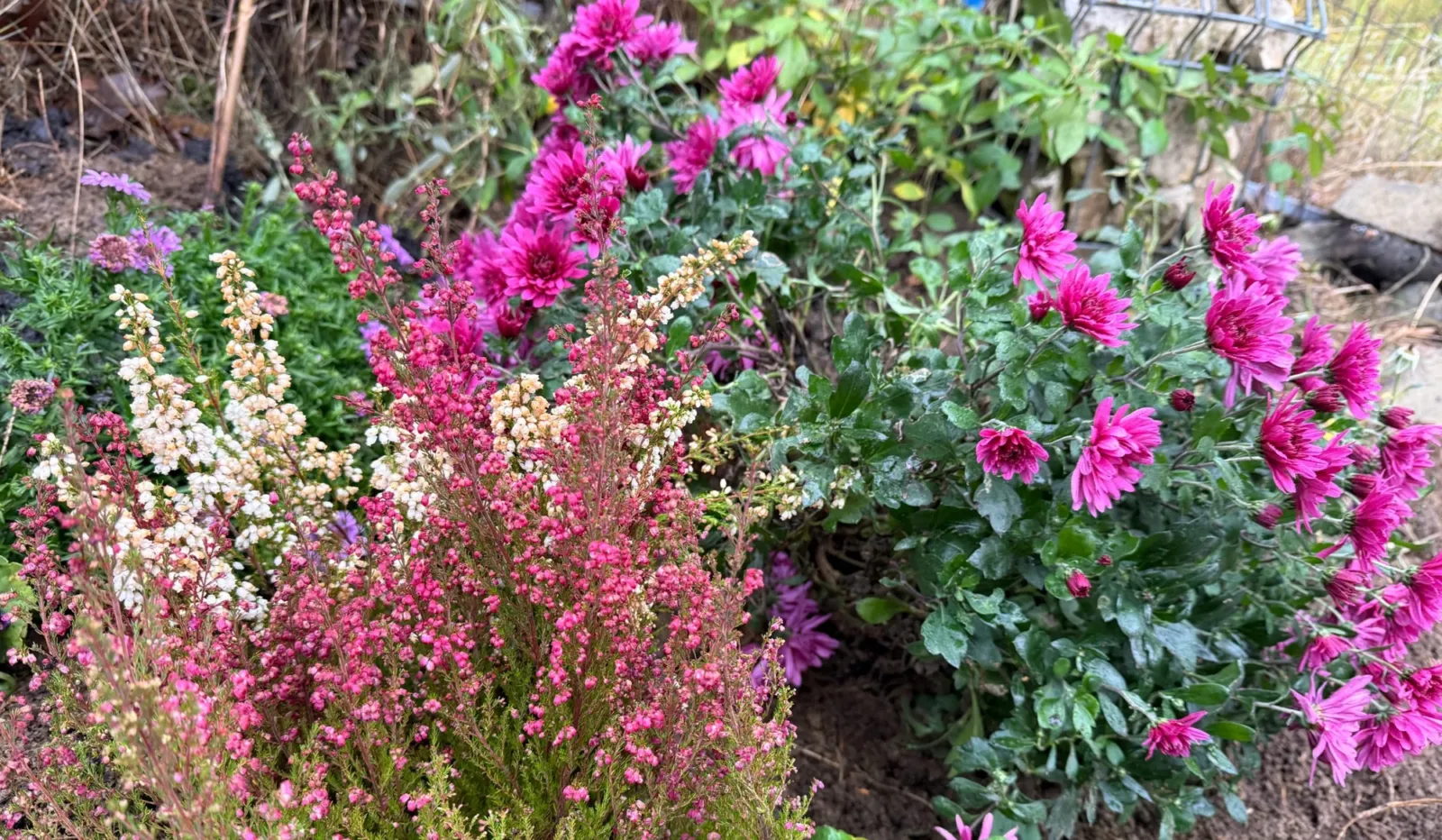
Double pink flowers with buds · a clump of red chrysanthemums with small flowers · magenta chrysanthemums in a fall bed. From my garden in Bran.
Three groups worth telling apart
On a phone, swipe the table to the left.
| Type of chrysanthemum | How to recognize it | Light and the right spot | Bloom | Cold hardiness and how they do in Bran |
|---|---|---|---|---|
| Garden mums | Compact mounds covered in double or semi-double flowers in fall | Full sun, moist, well-drained soil | Fall | Zones 5–9; in Bran they’re fairly hardy if they root before winter |
| Florist mums | Large flowers, often one per stem; sold in pots as decorative plants | Lots of light; mostly indoors or on a patio | Fall, often late | Less hardy than garden mums; frost can kill the buds |
| Rubellum mums (heritage mums) | Single, daisy-like flowers with a yellow center (for example ‘Clara Curtis’) | Full sun; in part shade the plant gets sparse | From early fall until the first hard frost | Zones 4–8; among the most cold-hardy |
These are three common groups, not the full range of chrysanthemums. The hardiness zones are approximate and come from the botanical profiles in the sources; in Bran, planting time and what I see in my own garden matter more. [2, 3, 4]
What the flowers look like
01
Single and semi-double flowers
One or a few rows of petals around a visible center, like a daisy. They’re the easiest for bees and butterflies to work, because the pollen and nectar stay within reach. Rubellum mums have flowers like this. [4]
02
Double flowers
The petals overlap in many rows and hide the center. They’re the most common type among the garden mums sold in fall. They bring plenty of color, but bees can hardly reach the center.
03
Pompon
Small, round flowers, almost like little balls, with short, tight petals. They’re easy to spot on low mounds completely covered in bloom.
04
Spoon and quill
The petals are narrow and rolled into tubes. In spoon types, the tip of each petal widens like a small spoon.
05
Spider
Long, thin petals, often curled at the tip, that give the flower a tousled look.
And a wider classification
Thirteen classes
Chrysanthemum societies divide them into 13 classes by flower form, from simple daisies to exotic shapes. In the garden, the most common are single, double and pompon flowers. [5]
Care starts with the right spot
Chrysanthemums want sun: at least six hours of direct light a day. They need soil that holds moisture but doesn’t stay waterlogged, especially in winter, when standing water can kill the roots. In my garden, the ones bought from the supermarket in late spring, or from DIY stores such as Hornbach and Brico Dépôt in early September, settle in best. What matters is that they have time to root before the frost. Space plants 30–45 cm (12–18 in) apart, and water them very well for the first few weeks. Something less well known: a porch or garden light left on all night can delay or even prevent blooming. [1, 2]
Watering and feeding
Don’t let the soil dry out completely, but don’t keep it constantly wet either. Once they’re established, chrysanthemums only need watering in dry spells, and a layer of mulch helps hold moisture. A slow-release fertilizer when growth starts in spring is enough; too much fertilizer makes long, soft stems that flop. [1, 2]
Propagating from cuttings
In my garden, chrysanthemums are very easy to propagate from cuttings. In spring, take young shoots from the base, 5–7 cm (2–3 in) long, strip the lower leaves and set them in a free-draining mix of potting soil and sand, in bright light but out of direct sun. They root in three to five weeks. Older clumps can also be divided in spring every 2–3 years, keeping the vigorous outer pieces and discarding the worn-out center. [1, 2]
No pruning in fall, pinching in spring
In fall I leave the dry stems standing, because they protect the base of the plant over winter. Some guides recommend cutting plants back to 20 cm (8 in) after flowering, but experts at Iowa State University found that garden mums survive winter better when the old stems are left in place. In April, when growth starts, I cut the old stems. In June I pinch the shoot tips, that is, I nip them off with my fingers, so the plant branches out and forms a full crown with more flowers. [1, 2]
Calendar at a glance
On a phone, swipe the table to the left.
| When | What I do | Why |
|---|---|---|
| Fall, after flowering | No pruning; I leave the stems over winter | They protect the base of the plant; plants survive winter better |
| April | I cut the old stems as growth starts | Makes room for new shoots |
| Spring | Cuttings from young shoots; dividing old clumps | New plants, easy to get |
| June | I pinch the shoot tips | The plant branches out and makes more flowers |
| July | Pinching stops | Pinched later, plants may bloom too late for the mountains |
| Late spring or early September | I plant new chrysanthemums and water them very well | They have time to root before the frost |
In the mountains, rooting time matters
A chrysanthemum bought in bloom and planted when the first frosts arrive has too little time to grow roots into garden soil. Botanical profiles list garden mums as hardy in zones 5–9, so they can get through cold winters, but only if their roots are well established and they don’t sit in water. Over winter, a mulch of straw or pine needles helps; put it down once the ground starts to freeze and remove it early in spring. Leaves mat down and stay soggy, so they’re not a good choice. Chrysanthemums in pots are the most exposed and should be moved somewhere frost-free for the winter. [1, 2, 3]
What works for me in Bran
From what I’ve seen, chrysanthemums are fairly hardy in Bran. The ones that settle in best are those bought from the supermarket in late spring, or from DIY stores such as Hornbach and Brico Dépôt in early September. For the first few weeks, I water them very well.
What matters for winter: giving them time to root, not cutting them back in fall, and waiting until April to cut the old stems. In June I pinch the tips so they form a full crown. They’re very easy to propagate from cuttings, so one successful plant quickly becomes several.
Pests and diseases
In my garden, the biggest problem is slugs, which go mostly for young plants. Many chrysanthemums are prone to powdery mildew and rust. Powdery mildew shows up mostly in dry weather, and chrysanthemum white rust can be very damaging and hard to control. In wet weather, gray mold appears on the flowers. Aphids, leaf miners and earwigs can show up too. Good air flow, watering at the base rather than on the leaves, and removing diseased leaves promptly all help. [1, 3]
Toxicity
Chrysanthemums contain sesquiterpene lactones and pyrethrins. They’re toxic to dogs, cats and horses if eaten and can cause vomiting, diarrhea, excessive drooling, loss of coordination and skin irritation. In sensitive people, handling the leaves can cause a mild skin rash. If a pet has eaten part of the plant, call your veterinarian. [3, 6]
For me, chrysanthemums close out the season in the garden. With patience at planting time and no pruning shears in fall, even the ones bought for a single season can stay for years.