
My garden · experience in Bran, Romania
How I choose hardy plants for my mountain garden
What I’ve learned over the years about cold, damp, wind and plants’ ability to come back.
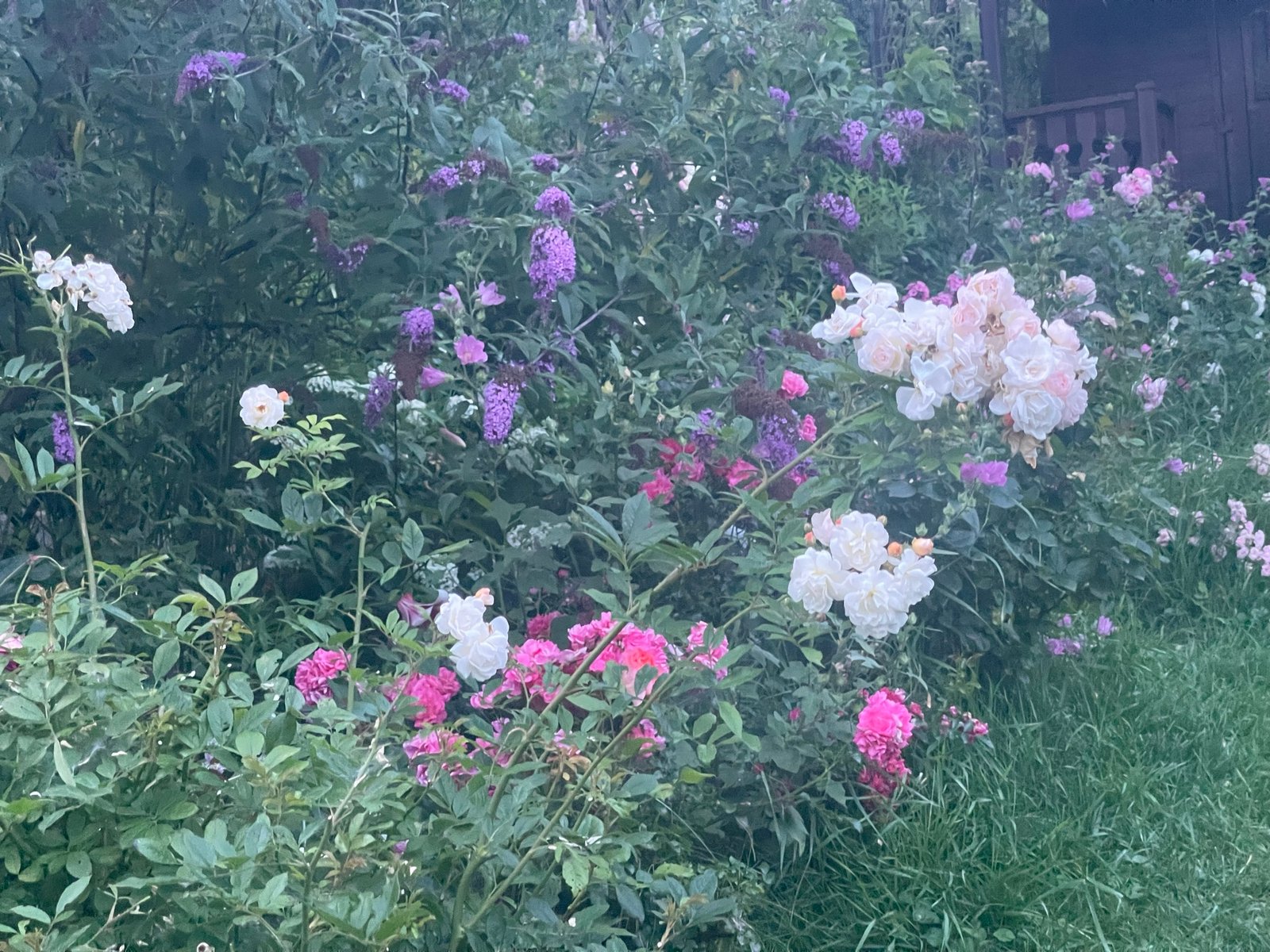
In my garden, a plant doesn’t become “hardy” after a single winter. Only after several seasons do I start to trust it: I watch it come through frost, late snow, wet spells and short summers, then come back without needing complicated protection.
This isn’t a catalog or a list of promises, but the story of the plants that have done well for me, in Sohodol, at about 770 meters (2,500 feet). In another yard, even a few miles away, exposure, wind and soil can change the outcome.
Hardiness proves itself over time
At first I was tempted to judge a plant by its first spring. Now I wait. Some start early and spectacularly, others stay silent until the ground really warms up. Phlox, for example, sometimes makes me think I’ve lost it, then shows its shoots from the base. Echinacea leaves reddish buds next to the dry stems, and peonies come back with that calm certainty you learn to recognize after a few years.
That’s why I don’t rush to clean up, and I don’t declare a plant lost too soon. In a mountain garden, patience is part of the care.
What a hardy plant means to me
It comes back after winter
It starts again from the root, from basal buds or from a rosette kept under the snow, even if the top growth has disappeared.
It adapts to the spot
It copes with differences in light, with wind and with swings between wet and drier spells.
It doesn’t need complicated protection
It may need cleaning up, dividing or staking, but it doesn’t depend on special measures every year.
It keeps its purpose
It stays healthy, blooms and adds to the garden’s structure, rather than just scraping by.
Hardiness doesn’t mean needing no care at all. A plant can handle frost and still suffer in soil that stays waterlogged. Another can get through winter without trouble but need water in a dry summer. Cold is only one of the tests.
The plants the garden relies on
Perennials that come back from the root
Echinacea, phlox, peonies and Geranium sanguineum are among my most reliable markers. In spring I look for different signs in them: buds at the base of old stems, reddish tips breaking through the soil or new leaves hidden under last season’s debris. Mint, lemon balm and thyme also come back easily, and ornamental salvia has proven steady in well-drained spots.
Plants that keep some green
Lavender, culinary sage and some clumps of Geranium sanguineum keep part of their structure or foliage over winter. That doesn’t mean they look perfect in February. The leaves can be flattened, grayish or burned by the cold, but underneath the plant stays alive and starts again after the spring cleanup.
Roses, each in its own way
In my collection, the roses don’t all behave the same. Some come through the winters with hardly a mark; others lose their exposed tips and rebuild the bush from lower down. I judge them over years, not by a single bloom: healthy foliage, rain resistance, recovery after frost and repeat blooming all count together.
Plants that stay by self-seeding
Sometimes a plant’s continuity doesn’t come from the same plant surviving, but from the seeds it leaves behind. Sweet William, English daisies and, in the right years, snapdragons come back to the garden this way. To me these are still hardy plants, but in a different sense: not every clump necessarily survives the winter, but the plant keeps its place in the garden.
Columbines — free to choose their spot
Columbines (Aquilegia vulgaris) are among the plants that have earned their place here on their own. They come through winter well, and after blooming they self-seed into cracks, along edges and in corners I wouldn’t necessarily have chosen. The seedlings can come in colors different from the parent plant, and that change is part of their charm.
A useful distinction: with perennials I watch for the same plant coming back; with biennials and some short-lived plants I also watch for continuity through seed. Both can build a stable garden, but in different ways.
The right spot matters as much as the plant’s name
A “hardy” plant set in a wet hollow can disappear, while the same species a few meters away, in an airy, well-drained spot, can live for years. At the top of the slope I watch how quickly the soil dries out; in the low areas, how long it stays wet after rain. The light changes too from spring to summer, as the trees leaf out.
That’s why, before I give up on a plant, I ask myself whether I chose the wrong species or just the wrong spot. Sometimes moving it is enough. Other times, the right answer is to accept that the plant isn’t a fit for my garden.
A garden built on proven plants
I try to build the garden’s structure around the plants that have shown me they can stay: perennials that come back, tough herbs, healthy roses and flowers that sow themselves. Among them, I allow myself some more fragile experiments too. If they work, I gain a new plant; if not, the garden doesn’t lose its balance.
The list will keep growing. I’ll add observations here after each season, not to set a recipe, but to keep the garden’s memory alive.