
Practical guides · Pruning by plant type
Pruning hydrangeas
Identifying your hydrangea correctly sets the pruning rules
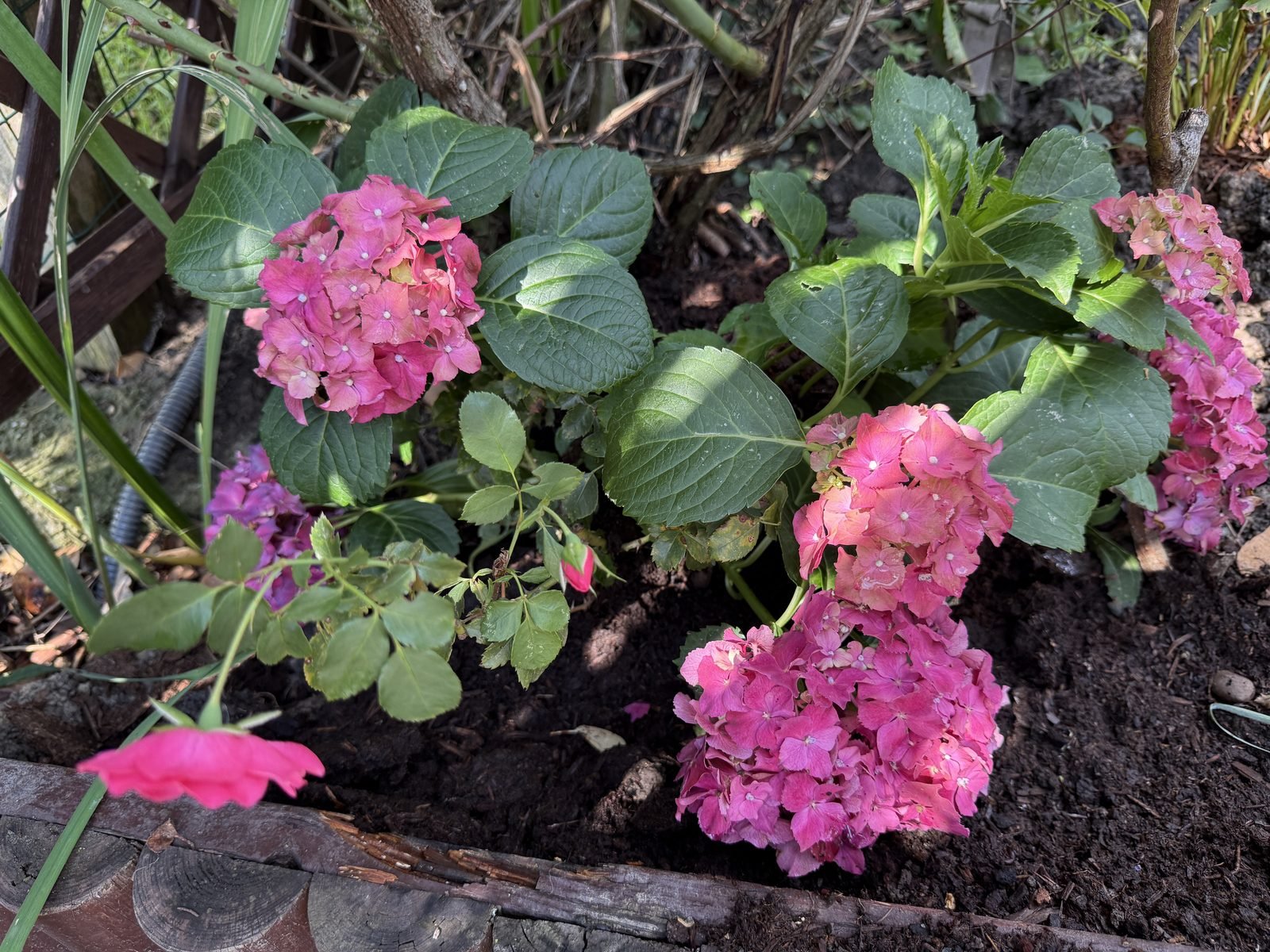
With hydrangeas, the first question isn’t “how much do I cut?” but “which stems does this bush bloom on?”. A plant can look fine after a tidy-up and still have lost exactly the buds that were going to make the flowers.
The shape of the flower is only a clue. The label with the species and variety helps me more than the rule “all hydrangeas with round flowers are pruned the same way.”
In short
Old wood
Macrophylla and serrata
In spring, only the old flowers, down to the first pair of healthy buds [1]
New wood
Paniculata and arborescens
Late winter – early spring; they handle hard cutting back [1]
Minimal pruning
Quercifolia and climbing
Two flushes of flowers
Reblooming
As with macrophylla: I keep the healthy stems [2]
To identify
No label
I remove only wood that’s clearly dead and watch for a season.
Avoid
What I don’t do
I don’t prune in fall, and I don’t prune before the end of April [4]
Guide calendar for Bran
The months are meant for my garden, at 770 m (2,500 ft). Each year’s weather can shift them by a week or two.
Approximate times for pruning hydrangeas in the garden in Bran, Romania
| Task | Jan | Feb | Mar | Apr | May | Jun | Jul | Aug | Sep | Oct | Nov | Dec |
|---|---|---|---|---|---|---|---|---|---|---|---|---|
| Paniculata, arborescens | ● | ● | ||||||||||
| Macrophylla, serrata: old flowers | ● | ● | ||||||||||
| Macrophylla: 1–2 old stems | ● | |||||||||||
| Lacecaps: spent flowers | ● | |||||||||||
| Quercifolia, climbing | ● | ● |
Old wood and new wood
By “old wood” I mean stems grown in previous years, on which the plant already has its flower buds. By “new wood” I mean this year’s growth. That’s where the whole difference comes from: some hydrangeas need a light tidy-up, others handle drastic cutting back. [1]
In the mountains, a tip can be hit by frost while the buds lower down are still alive. I don’t declare the whole stem lost based on how it looks at the end of winter: I wait for the buds to start.
Old wood
Macrophylla and serrata
When and how much I cut
In spring: the old flowers, down to the first pair of buds; 1–2 old stems from the base [1]
Old wood
Lacecaps lacecap
When and how much I cut
After flowering: spent flowers, down to the second pair of leaves [1]
New wood
Paniculata and arborescens
When and how much I cut
Late winter: down to 25 cm (10 in) for big flowers or around 60 cm (2 ft) for a taller bush [1]
Old wood
Quercifolia
Old wood
Climbing
When and how much I cut
After flowering: only what grows out of its space [1]
Macrophylla and serrata
Many varieties of these species bloom on the previous year’s wood. I keep their stems over winter and don’t prune them in fall. I leave the dry flowers on the bush until spring, because they protect the buds below a little. Once the healthy buds are clearly visible, I cut the old flowers above the first strong pair of buds. [1], [4]
If a mature bush has become crowded, I remove one or two very old stems at the base. Cutting all the stems short every year isn’t recommended, because a sudden regeneration will compromise that season’s bloom. [1]
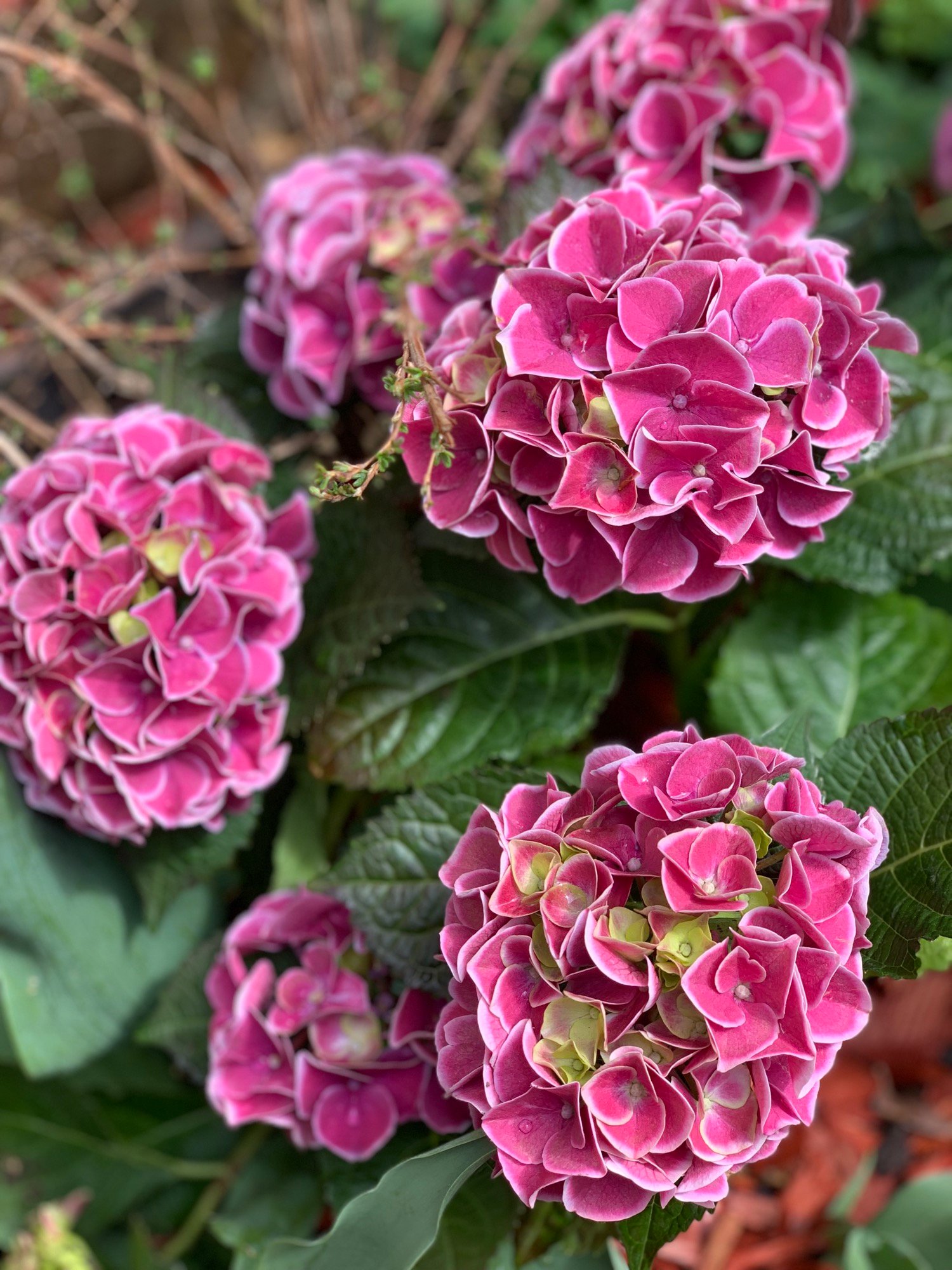
Reblooming hydrangeas
Some varieties bloom on both old wood and new growth. That gives me a second chance, but even here I can’t cut as much as I like. Hard pruning can delay the flowers or remove the first flush. [2]
In a garden with a short season like mine, the difference between an early flower and a very late one matters. That’s why I check the variety before waiting for the second flush.
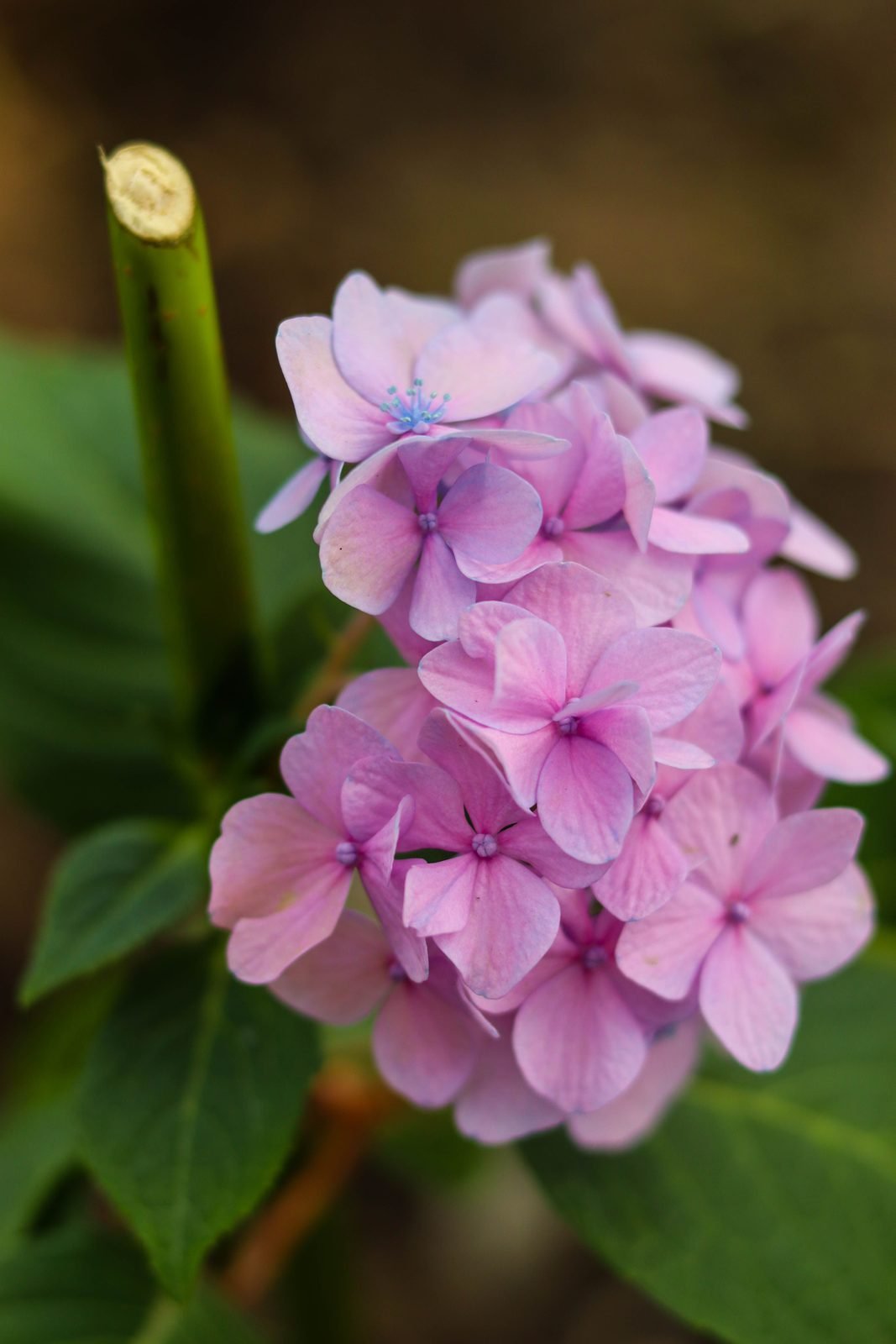
Paniculata and arborescens
These species bloom on this year’s growth. I prune them in early spring, before the new shoots get big. I remove dead wood, then shorten the stems above healthy buds. [1], [2]
How low I cut depends on what I want: down to 25 cm (10 in) from the ground for big flowers on strong stems, around 60 cm (2 ft) for a taller bush. On young or weakened plants I cut less. [1]
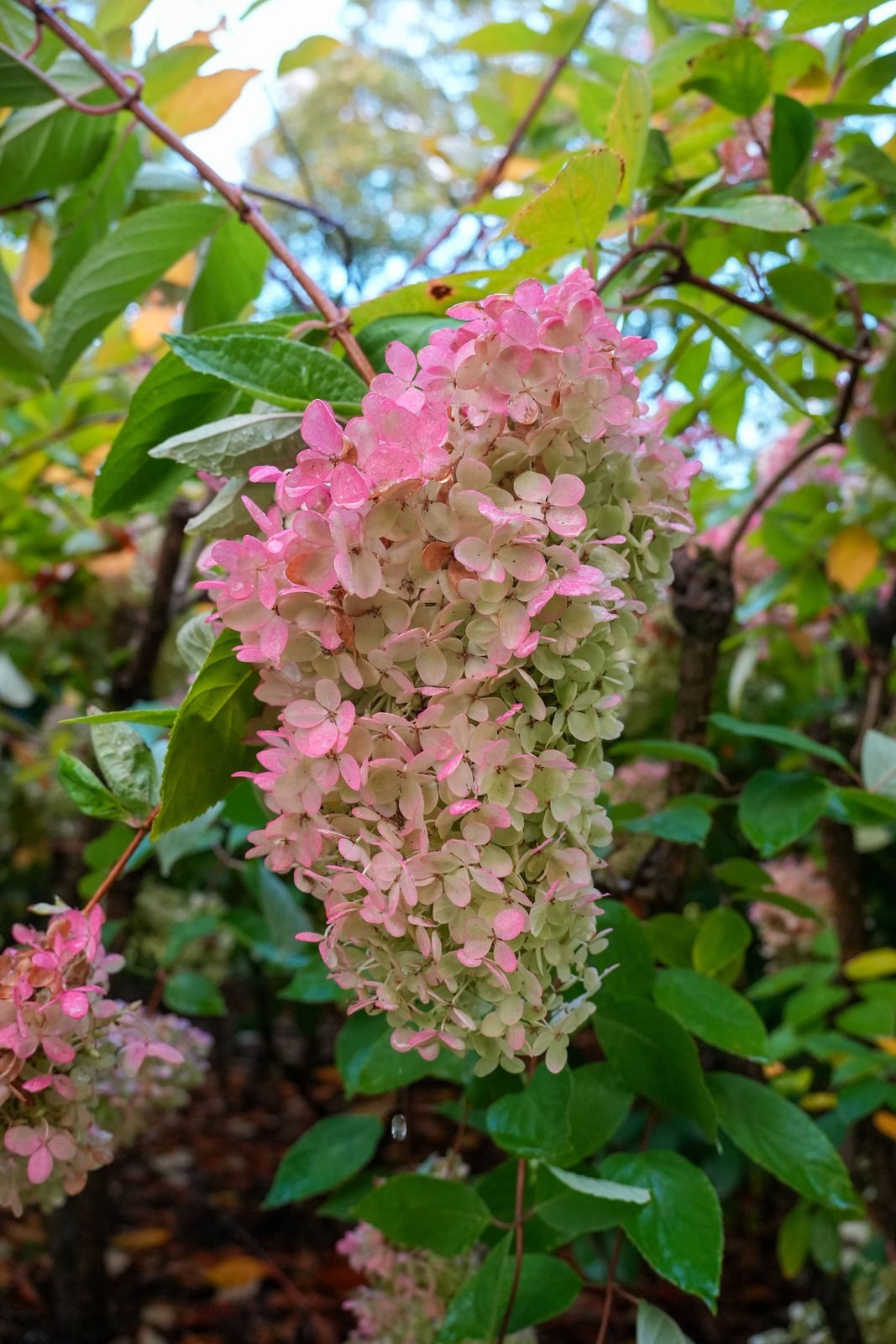
Species that need minimal pruning
The climbing hydrangea needs only occasional pruning, done after flowering. With Hydrangea quercifolia and other varieties that bloom on old wood, the approach differs from the one used for paniculata: I keep their natural shape and avoid drastic cutting back, so I don’t remove the flower buds. [1], [3]
If I no longer have the label
I don’t do a hard “test” pruning. I keep the stems that look healthy, watch where the buds start and where the flowers appear, and try to identify the plant. Wood that’s clearly dead I can remove anytime.
With hydrangeas, patience often saves more flowers than a job done early, in a hurry, just because it’s spring.
Step by step
- I identify the species: from the label, by the leaves or by how it bloomed last year.
- I wait for the buds to start growing so I can clearly see what came through the winter.
- I remove dead wood completely.
- I prune according to the species group, as described in the cards above.
- On mature bushes, I remove one or two old stems at the base.
Common mistakes and what I do
Diagnosis
Macrophylla with no flowers after pruning
Diagnosis
Black tips in spring on macrophylla
Likely cause
Frost on the buds [1]
What I do
I cut back to the first pair of buds that have started growing.
Diagnosis
Paniculata with thin, drooping stems
Likely cause
Pruned too little, year after year.
What I do
In spring I cut more firmly, above strong buds. [1]
Diagnosis
A crowded bush with small flowers
Likely cause
Too many old stems [4]
What I do
I remove 1–2 old stems at the base every year.
Diagnosis
Crushed cuts that dry out
Likely cause
Dull or dirty pruners [4]
What I do
I sharpen and disinfect the blade.
Tools and hygiene
The pruners have to be sharp and clean: a smooth cut heals faster than a crushed one. For thick stems I use loppers or a saw and don’t force the small pruners.
When I cut diseased stems, I wipe the blade with 70% alcohol before moving to the next plant, so I don’t carry the disease along. At the end I clean the tools, dry them and oil them lightly so they don’t rust. [5]
What I do with the cut stems
Dry flowers and healthy stems I chop up and add to the compost. A few hollow macrophyllastems, left standing, can shelter solitary bees. Spotted leaves I take out of the garden.
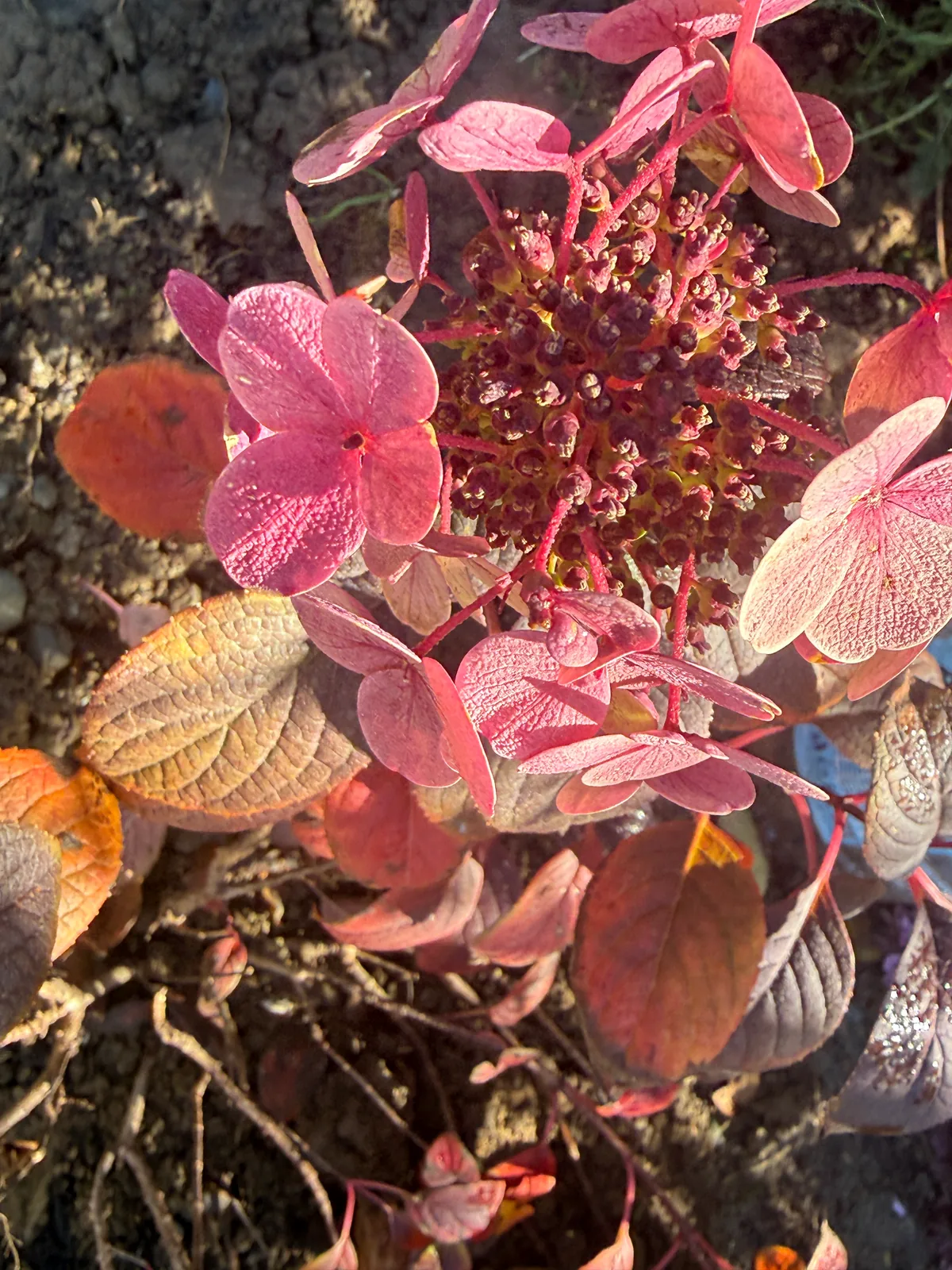
In my garden
In the garden
Paniculata, creamy white
Blooms on
New wood
When I prune
March–April
In the garden
Arborescens white
Blooms on
New wood
When I prune
Spring, to 20–30 cm (8–12 in)
In the garden
Macrophylla with round flowers
Blooms on
Old wood
When I prune
April–May, only the old flowers
In the garden
Lacecap hydrangea
Blooms on
Old wood
When I prune
After flowering
In the garden
Quercifolia ‘Ruby Slippers’
Blooms on
Old wood
When I prune
Very little, after flowering
In the garden · variety to be confirmed
Proven Winners, probably the Tuff Stuff series
Checklist
- I know the species of each hydrangea.
- I left the dry flowers on over winter.
- I waited for the buds to start growing.
- I pruned paniculata and arborescens before the shoots started growing.
- On macrophylla I cut only the old flowers.
- I removed the dry stems at the base.
Further reading
- RHS — Hydrangea pruning
- University of Minnesota Extension — Pruning hydrangeas
- University of Georgia Extension — Pruning Hydrangeas: It depends
- Jardiner Malin — Pruning hydrangeas
- Jardiner Malin — Caring for garden tools
- Proven Winners — Tuff Stuff Top Fun, Hydrangea serrata
I’ve adapted the advice from these sources to my mountain garden. The weather, the plant and its condition matter more than the month on the calendar.