

Seasonal journal · Summer
Summer colors in Bran
How flowers change in the light of a garden at 770 meters (2,500 feet)
My first summer here, in 2007, puzzled me. I had planted the flowers I knew from my grandparents’ gardens, but in Bran (Brașov County, Romania) they looked different to me: some more intense than I remembered, others pale at noon and luminous only toward evening.
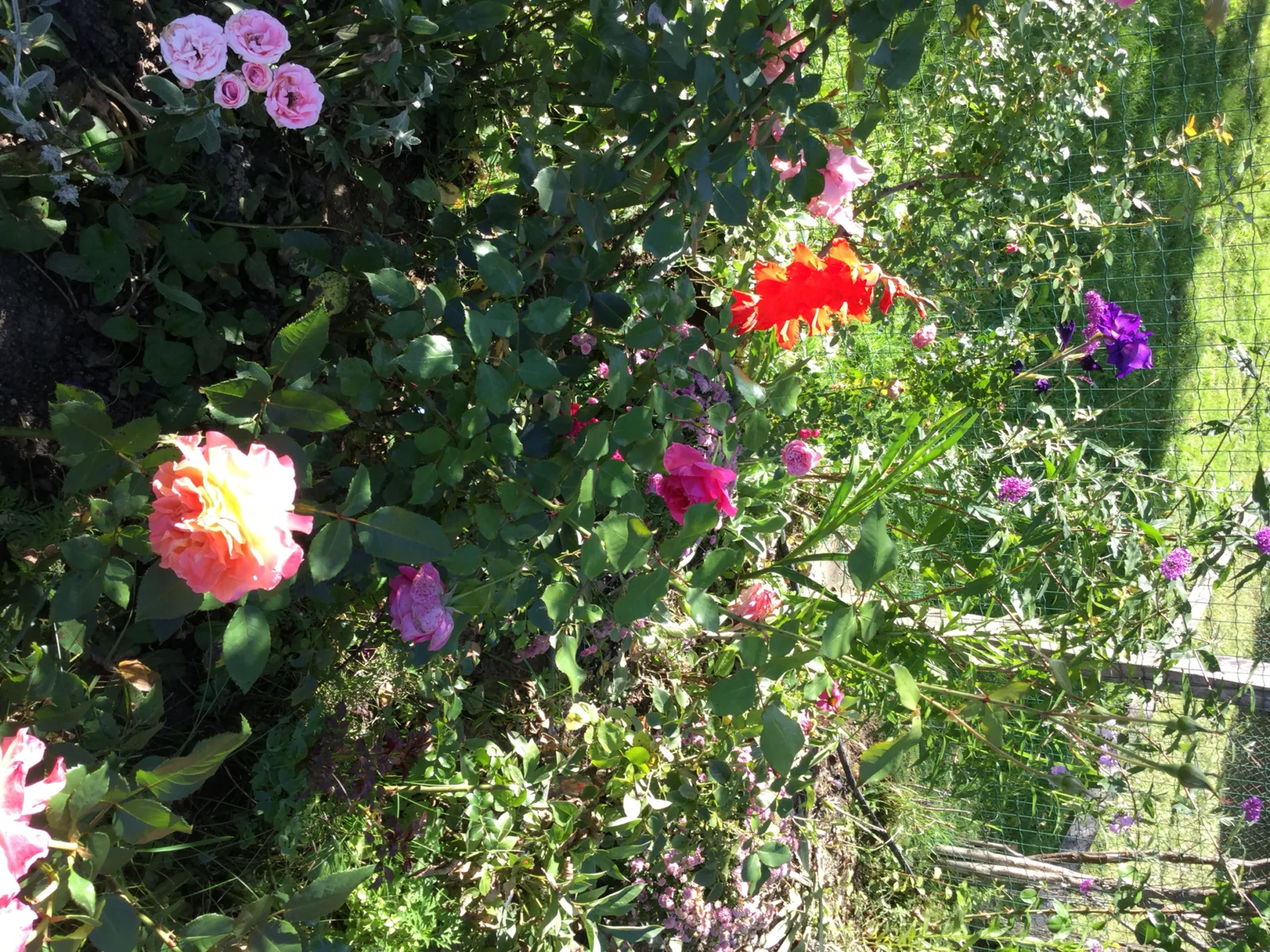
Over time, I began to look more closely not only at the flower but also at the light I was seeing it in.
Altitude alone doesn’t explain these differences. The time of day matters, the clouds, the shade of the mountains and trees, the green background, but also the variety, the age of the flower and the weather of the previous days. Sometimes the petal changes; other times, the way we see it changes. For me, this observation has become more useful than any catalog photo.
In this article
01
Light changes the way I see colors
In the strong midday sun, delicate shades can lose depth and shadows become harsher. In the morning and toward evening, the same flower can look richer in detail. In the shade, tones sometimes take on a coolness I don’t notice in direct light.
In my garden, it also matters when the sun disappears behind the hills or the trees. Not every corner falls into shade at the same time. That’s why, before choosing a combination for a spot, it’s worth looking at it at the times we actually use it: in the morning, by the path, or in the evening, where we stop to sit.
02
Three principles that changed my choices
Repetition connects the beds
A few plants or colors repeated in several places make the garden feel like a whole. Groups of three or five can be a starting point, but they aren’t a rule: one large shrub may need all the space several small plants would take. I care about how they’ll look when mature, not just on planting day.
Foliage matters even when there are no flowers
The silver of lavender, the fleshy leaves of sedum or the purple of a Physocarpus keep the interest going between two waves of bloom. Leaf shape matters as much as color. A mass of small leaves looks different next to broad leaves than next to yet another plant with the same texture.
A narrower palette suits me
I keep coming back to pink, purple and white, with accents of deep purple. I don’t think a multicolored garden is any less beautiful; it’s just that, in mine, these repetitions bring calm. I also allow myself an exception if I like a flower enough.
03
How summer changes in my garden
June
Pink and white make their way in with peonies and the first flushes of roses. Hardy geraniums keep them company at ground level, and foxgloves raise tall spikes of bells above them. A long rain can cut short the joy of some flowers, while others are only getting ready to open.
July
The focus shifts to violet and magenta. Garden phlox, lavender in the right spots, sweet William and snapdragons bring other shapes and heights. Not all of them peak in the same week; a cold spring can change the overlaps a lot.
August
Echinacea brings color to the beds, and sedum, depending on the variety, starts to color its flower heads. Some ornamental grasses add spikes and warmer tones. Early chrysanthemums can announce that fall is near, even though summer isn’t over for the rest of the garden.
This is the rhythm I follow in my garden, not a fixed calendar for every mountain garden. Exposure, varieties and each year’s weather can shift blooms by weeks.
04
Combinations worth trying
- White and pale yellow flowers stand out well in the low evening light. They’re worth trying near the spot where you sit at dusk, especially against a dark background.
- Very dark purple flowers can get lost at a distance. A rose in this color, close to the path and paired with brighter pinks, shows its details better.
- Green or silver foliage can bridge two strong colors. I don’t necessarily have to move a plant just because its neighbors seem too contrasting.
- Airy flower heads and some ornamental grasses can tie groups together without hiding what’s behind them. The choice also has to take winter hardiness and the space available into account.
Green is the background that holds all of this together. Cool, damp summers can keep it fresh for a long time, but Bran has its dry spells too. A beautiful combination has to start from plants with compatible light and water needs.
05
Overlapping blooms
After a cold spring, I noticed that some blooms came closer together than I expected. That’s why I don’t look only at the month on the label, but also at how the plants that may share the same moment look together.
But the season isn’t just a few months of flowers. Spring bulbs, late-blooming plants, foliage and dried flower heads can extend the interest. Between the showy waves, a garden also needs plants that stay pleasing to the eye without flowering.
06
What helps me see more clearly
I photograph the garden from the same spot throughout the summer. The series of photos helps me see where a gap remains and which group looks isolated. For better comparisons, it’s worth keeping similar times of day and light conditions. A phone can adjust colors automatically, so a photo is a helper, not a judge of the real shades.
Sometimes I turn a photo black and white. It becomes easier to see the differences between light and dark areas. It isn’t a test the garden has to pass: a composition with close tones can be beautiful too. It’s just another way of looking.
And color doesn’t stop at flowers. The stone, the wood of the fence and the mountain in the background are part of the same view. When I choose a plant, I try to picture it next to them as well.
Summer in three photos
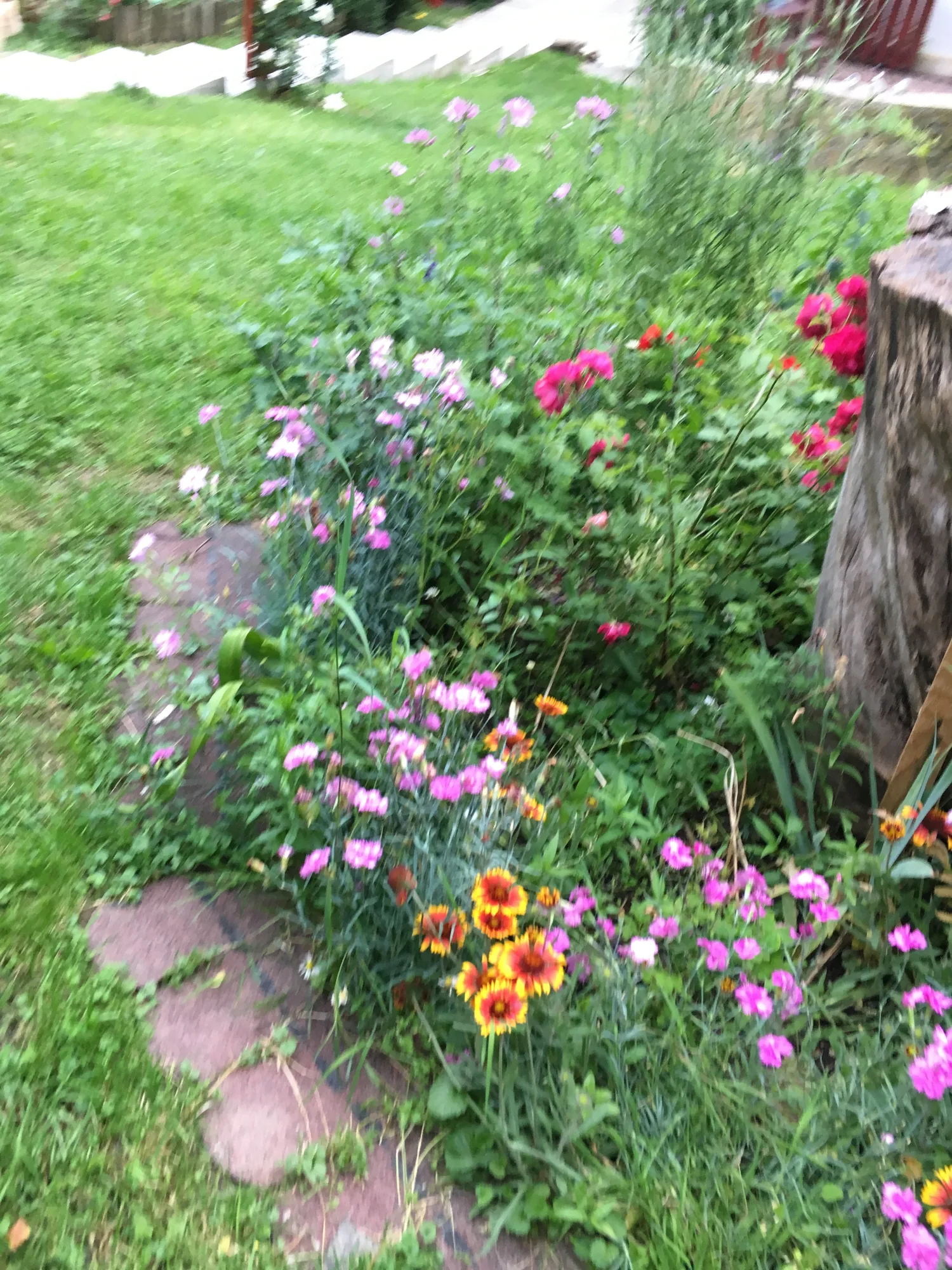
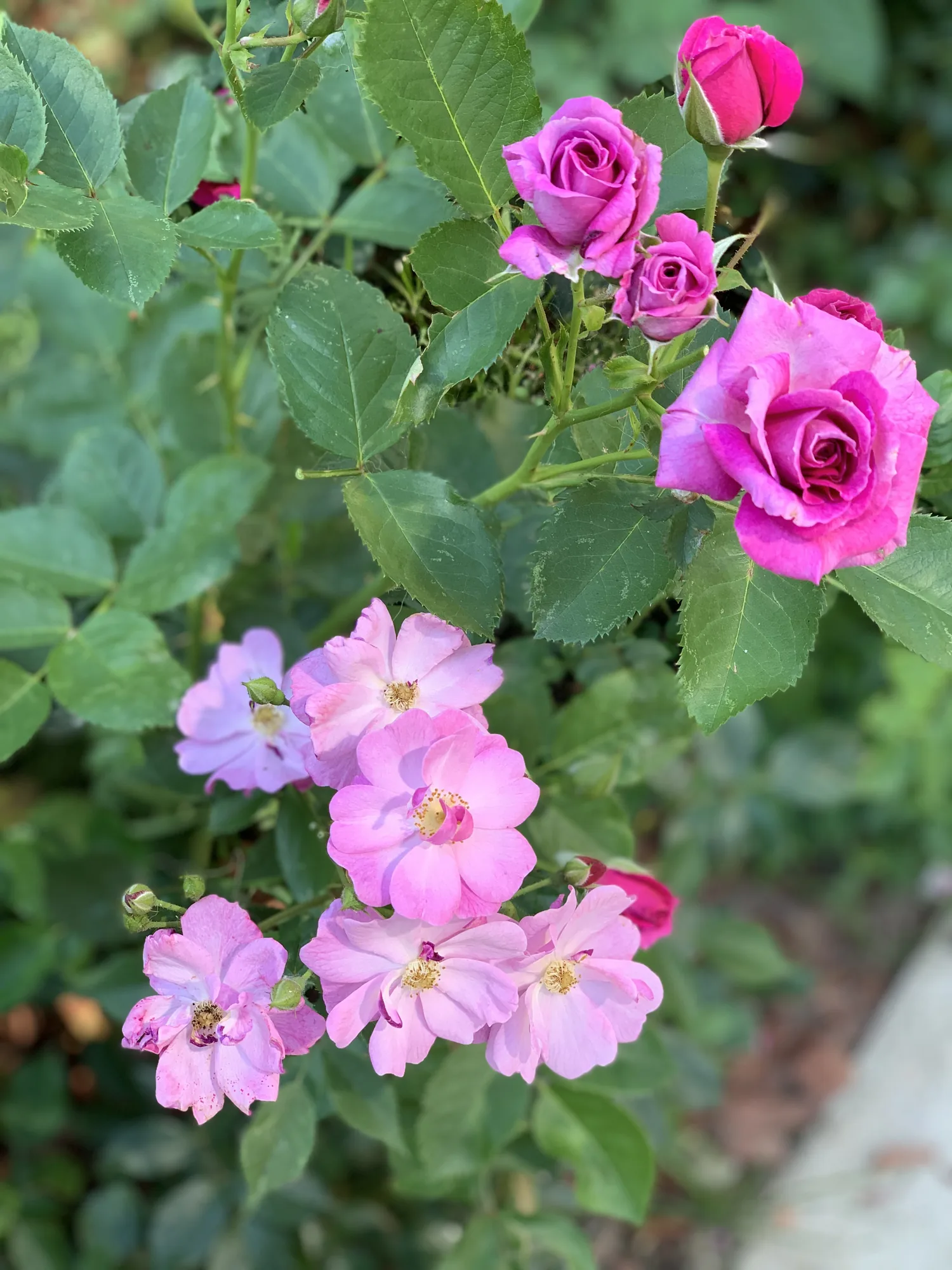
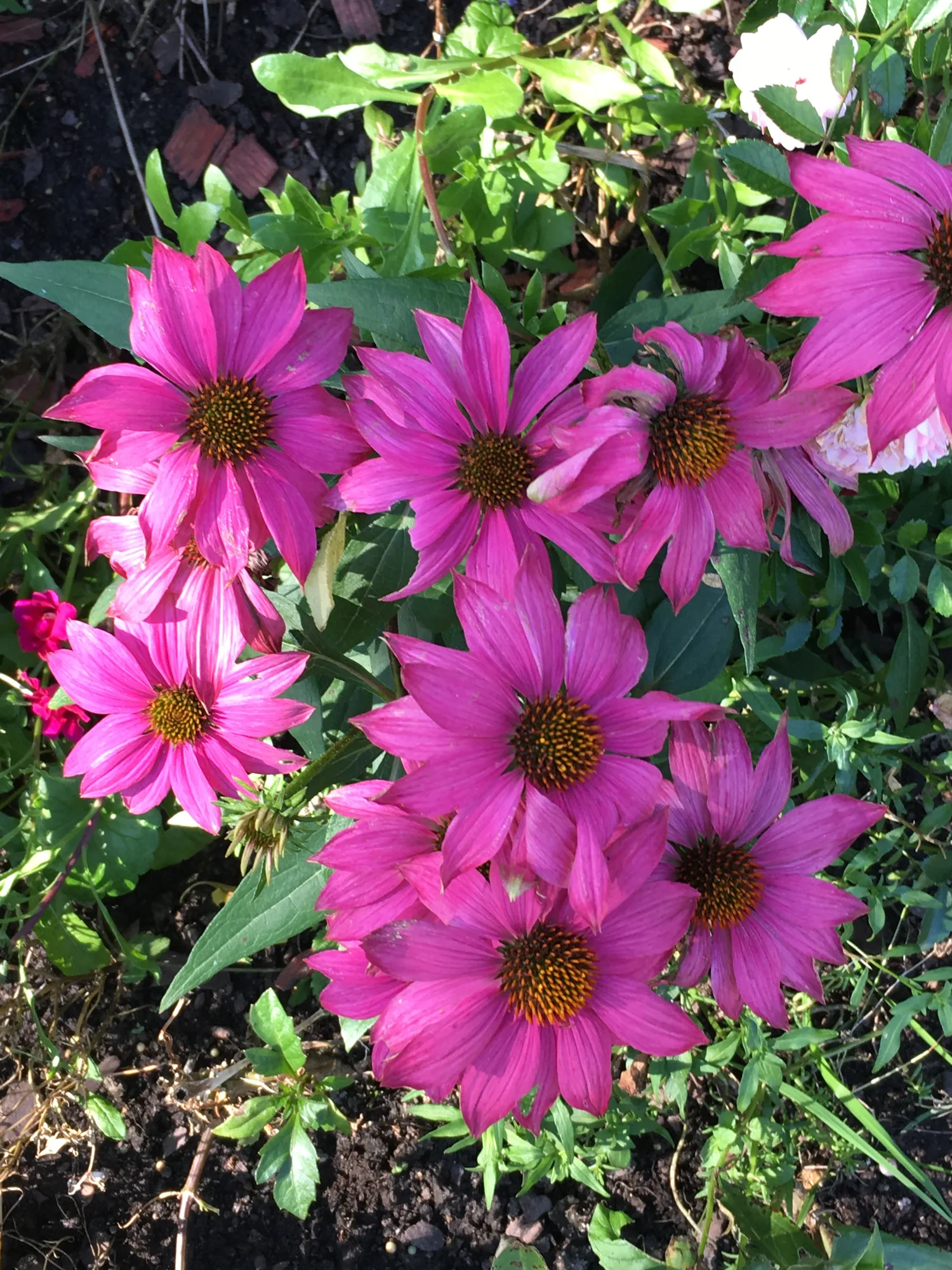
What colors do you have in your garden in summer? Tell me in the comments.
Further reading: RHS — foliage in garden design.