
Practical guide · Fall in Bran
Fall lawn care with three large dogs
A lawn that’s alive and easy to repair, not a perfect one.
Love, play and barefoot steps through a little corner of heaven
Above looks, I wanted a garden full of life and warmth — a space made for play and for relaxing, where love meets nature and gives you that priceless feeling of “home.”
The place
My garden in Bran, at about 770 m (2,500 ft)
The challenge
Three large dogs
The goal
A healthy lawn, not a perfect one
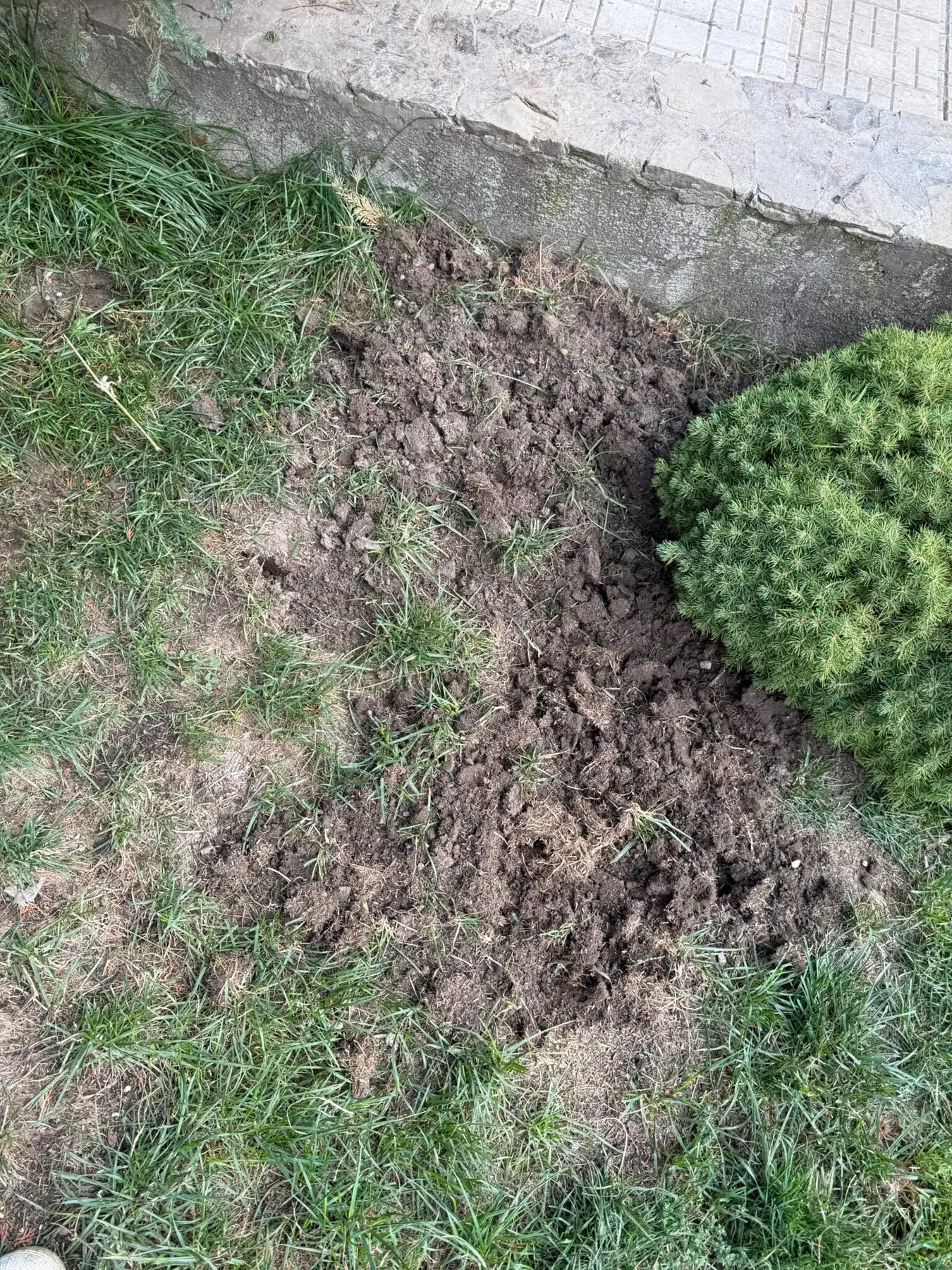
In my garden, fall is when I can best see the traces of summer: the paths the dogs run along, the thin patches and the spots where bare soil shows. I’m not trying to get a flawless lawn. I want a lawn that can recover and stays pleasant to use.
In the mountains, the weather keeps rewriting the calendar. If the soil has cooled too much, is waterlogged or the frosts are close, I put off sowing until spring. When the weather is still mild, I work in small areas and protect them until the new blades get stronger.
The seed that worked for me
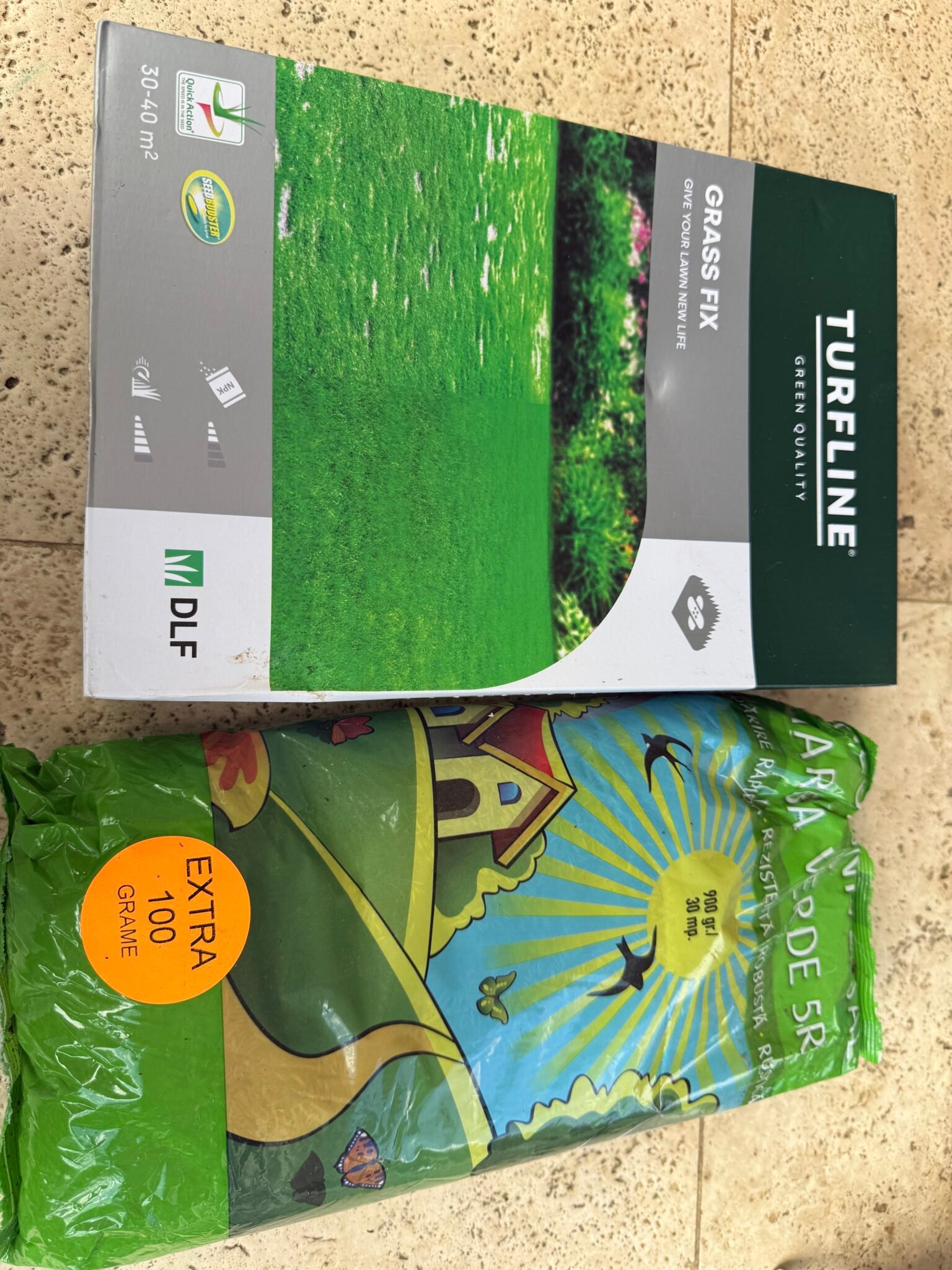
After several tries, I’ve stuck with the two mixes in the photo. They’re the only mixes I’ve had good results with so far in my garden. One is DLF Turfline Grass Fix, and the other is EVERDE universal lawn seed, green grass type, 0.9 kg (2 lb). I also tried much more expensive products, but with no result: the grass blades seemed to melt away soon after they came up.
This is my experience, not a promise that the same products will work the same in every yard. Exposure, drainage, foot traffic and weather change the result a lot. I follow the seeding rate on the package and pay special attention to good contact between the seed and the soil.
How I repair thin patches
01 · Preparation
I clean up and loosen lightly
I start by removing dead grass and plant debris. I loosen the soil in the bare spots shallowly, without disturbing the healthy lawn around them. Seed scattered over old blades, without contact with the soil, has a lower chance of taking.
02 · Sowing
I scatter the seed and press it in gently
I spread it as recommended on the package, then press it lightly onto the soil. A dusting of fine soil can cover it, but I don’t bury it under a thick layer. In the first weeks I keep the surface consistently moist with gentle watering, without puddles; how often depends on rain and temperature.
03 · The top layer
I top-dress thinly, without smothering the grass
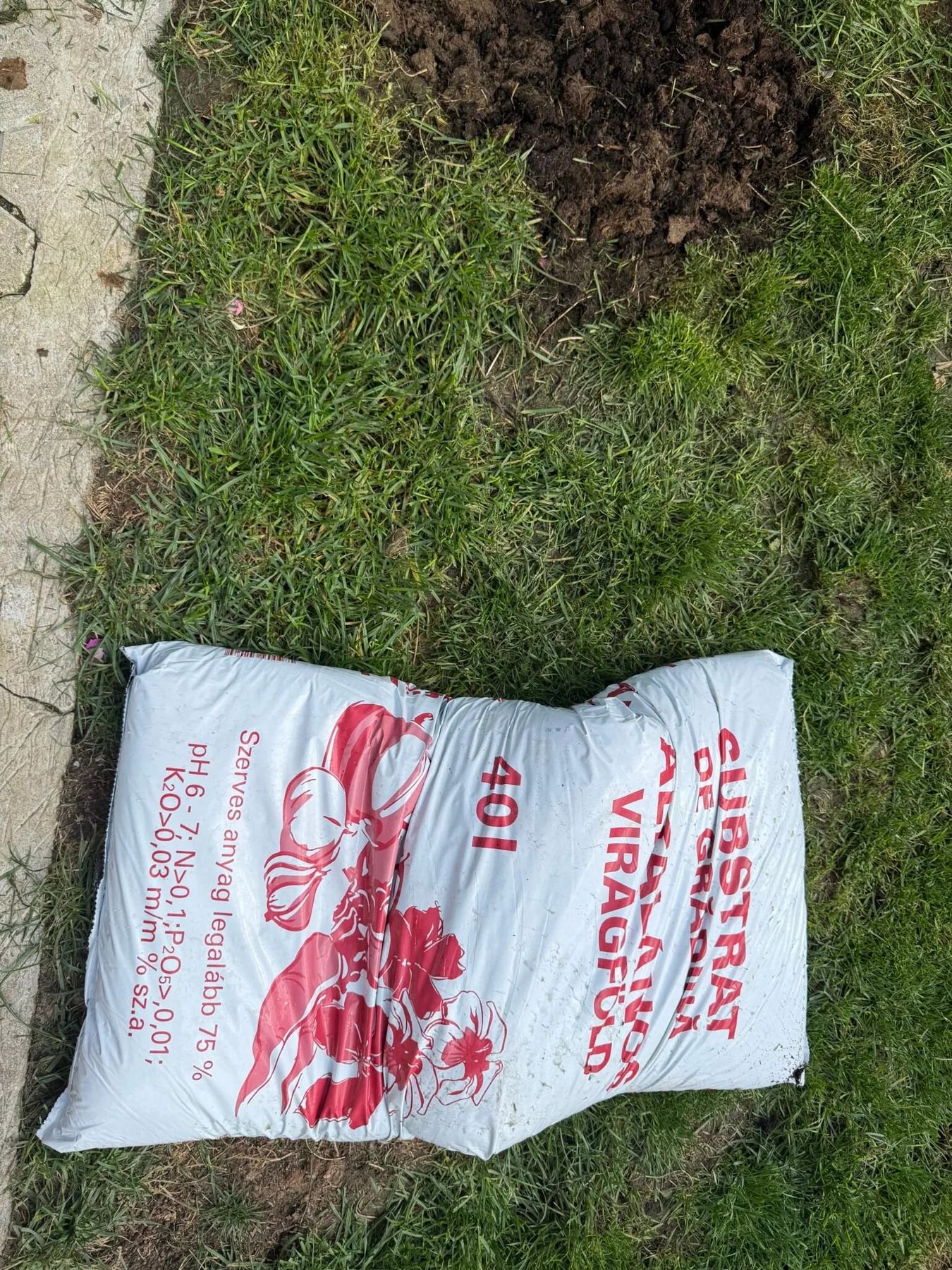
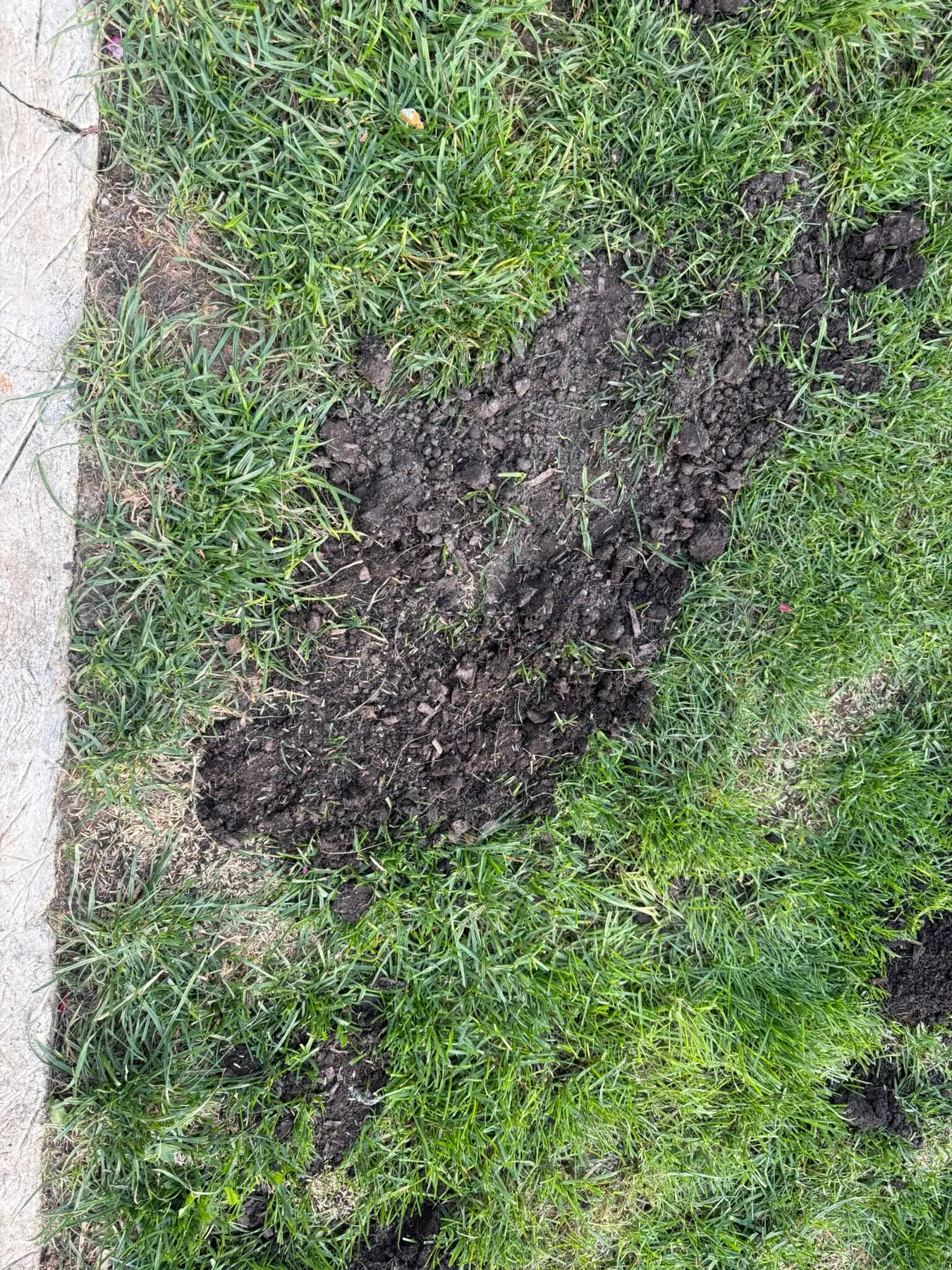
For the repairs in the photos I used a universal flower potting mix in a 40-liter (about 10-gallon) bag. I spread it in a thin layer, only where needed, so the existing blades stay in the light. I’m not presenting it as a universal solution for lawns: a mix rich in organic matter, spread thickly over grass, can hold too much moisture and smother it. Nor is the proportion of sand the same for every soil; if the problem is compaction or drainage, that has to be assessed separately.
04 · Mowing
The last mowings stay gentle
I keep mowing as long as the grass is growing, without cutting it suddenly short before the cold. For an established lawn I aim, roughly, for a height of about 4–5 cm (1.5–2 in) at the last mowing, adjusted to its condition. I used setting 2 on my Makita mower, but the setting number doesn’t mean the same height on every mower. I rake up fallen leaves so a wet layer doesn’t cover the grass.
05 · Feeding
I fertilize only if needed
I don’t automatically add an extra dose after sowing. I choose a product suited to the season and follow the label, especially if I’ve already used a starter fertilizer. With dogs in the yard, I keep them off the treated area for as long as the manufacturer says; watering also follows the product’s instructions.
Three dogs change the plan
If a path keeps coming back, I’d rather treat it as a walkway than reseed it endlessly. In the rest of the yard I gradually repair the damaged areas and try to keep the dogs off freshly seeded patches until the grass can take being walked on again.
Yellowish spots can have different causes. If I notice right away where a dog has peed, I water the spot to dilute the urine; but I don’t assume every spot is caused by that. Likewise, a fresh repair doesn’t become tough after a fixed number of days: I keep an eye on it and reopen the area only once the grass has taken well.
What I’ve learned here: with three large dogs, the realistic goal is a lawn that’s alive and easy to repair. The play areas will need more care than the quiet corners.
What I avoid in fall
- Sowing too late, when new grass no longer has time to root.
- Leaving seed on leaves or on dry grass, without contact with the soil.
- Spreading a thick layer of potting mix over the existing lawn.
- Mowing very short in a single pass, or letting wet leaves pile up.
- Letting the dogs onto freshly repaired areas or freshly fertilized lawn before the time stated on the product.
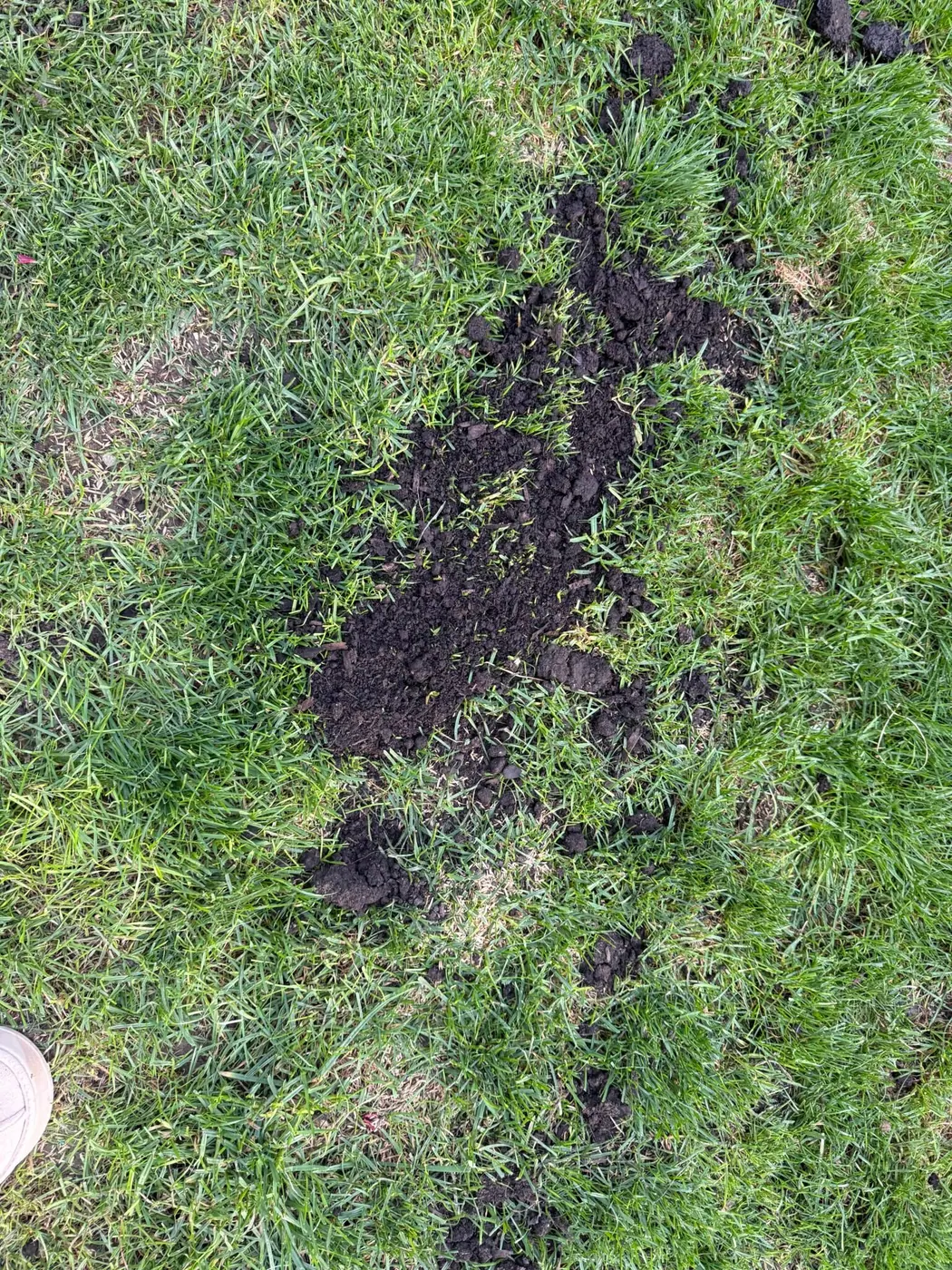
A lawn that lives along with the garden
I don’t know yet how all these patches will look in spring. I’ll watch where the grass takes, where the soil stays bare and which areas the dogs choose again. It’s exactly these observations that help me adjust the work from one season to the next.
If you have dogs in the yard too, I’d love to hear which seed mix and repair rhythm have worked for you.
The general advice on when to sow, preparing the soil and caring for young grass was checked against
,
and
Penn State Extension – Lawn establishment
. The photos and observations from the garden in Bran (Brașov County, Romania) are my own.