
Practical guides · Plant care
Pruning by plant type
When and how much I prune depends on the plant in front of me.
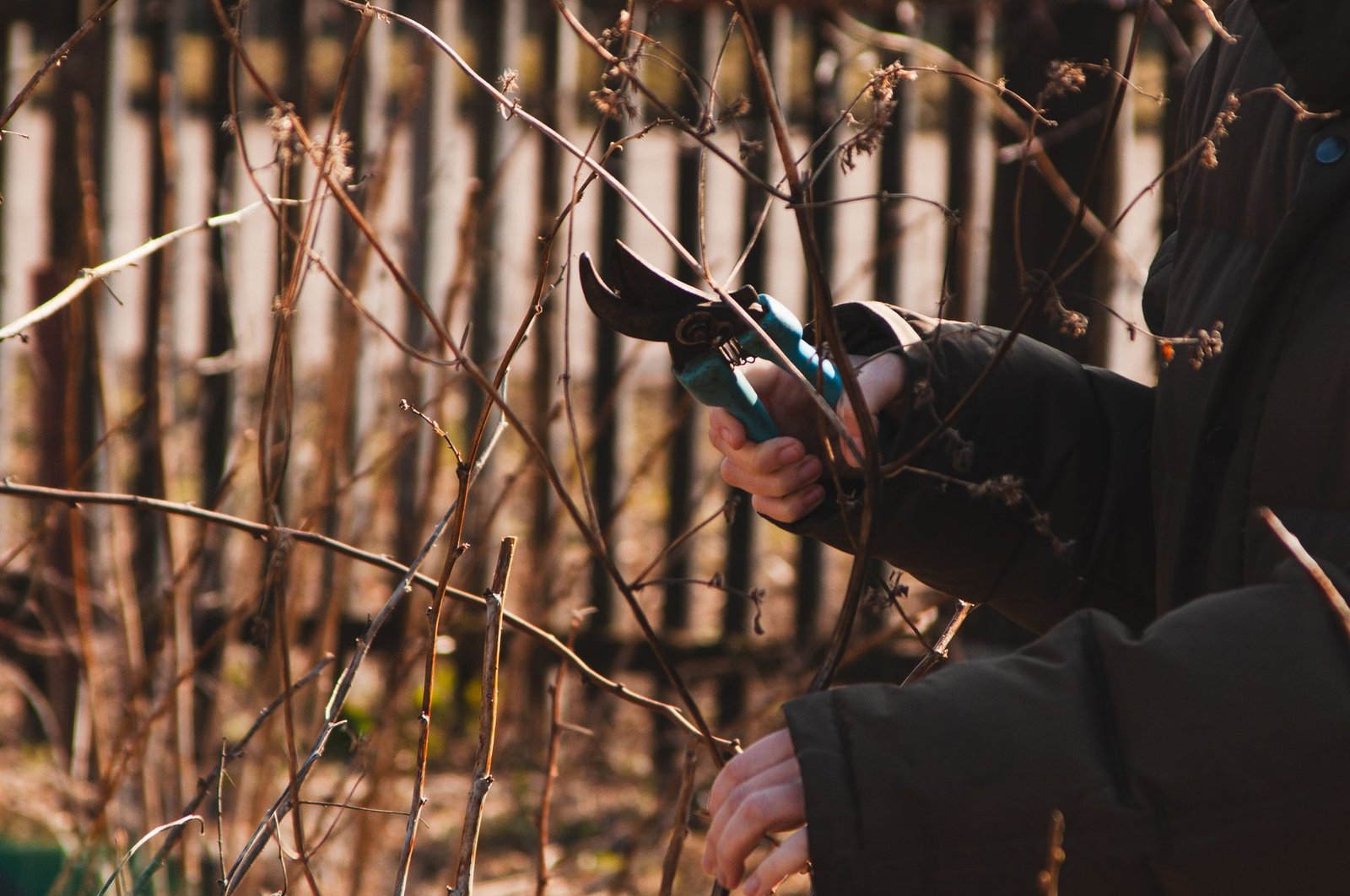
Pruning is one of the few garden tasks whose mistakes don’t show right away. The pruners cut in a second, and the plant’s answer only comes with the next bloom, sometimes a year later. A hydrangea cut back at the wrong time can go without flowers the following year; a rose that blooms only once can lose the buds it set up last summer. There’s no rule that works for the whole garden.
That’s why I don’t start with the pruners but with my eyes. I look at the plant, try to understand what it has prepared for the coming season, and only then choose what to do.
In gardens among the mountains, the weather rewrites the calendar.
In the mountains, however well you know a plant, the whims of the weather always leave their mark on it. A date written in the calendar doesn’t oblige me to go out with the pruners if the wood is frozen or the forecast calls for another cold snap. Frozen wood is brittle: it cracks and snaps where it should only have been cut.
Nature has its own signals, more reliable than the calendar. Many rose lovers wait for the forsythia to bloom before pruning their roses: when its stems light up yellow, the rose buds often start to swell. It’s a hint, not a guarantee that the frosts are over; in Bran (Brașov County, Romania) I watch the forecast too.
In fall, on the other hand, I put the pruners away. Late pruning can wake up new shoots that don’t have time to harden before the first frost. The exceptions are broken branches, which I don’t leave hanging over winter, and those snapped by snow, which I clean up as soon as I can reach them.
Three questions before the first cut
What plant is it, and what wood does it bloom on? Some plants set their flowers a year ahead, on wood grown last summer. If you cut it, you don’t make them bloom more; you just take away the flowers they already had. Others bloom on the current year’s growth, and for them a firm spring pruning is almost an invitation.
Why am I cutting? A broken branch, a young tree finding its shape and an old shrub that needs renewing are three different jobs. They don’t call for the same hand, and not always for the same season.
How much should I take now? A small, well-chosen cut often does more than trimming the whole plant evenly. A shrub left to its own devices for years recovers better over three springs than in a single day: each year, about a third of the oldest stems come out at the base, and the bush renews itself without being left bare. [1]
Two ways to cut
Not every cut tells the plant the same thing. When I remove a whole central branch at the base, the bush opens up, light reaches the inside, and the natural shape remains. When I shorten a branch by half, the plant responds with a bunch of new shoots right below the cut. Thinning calms the plant; heading back provokes it. [1]
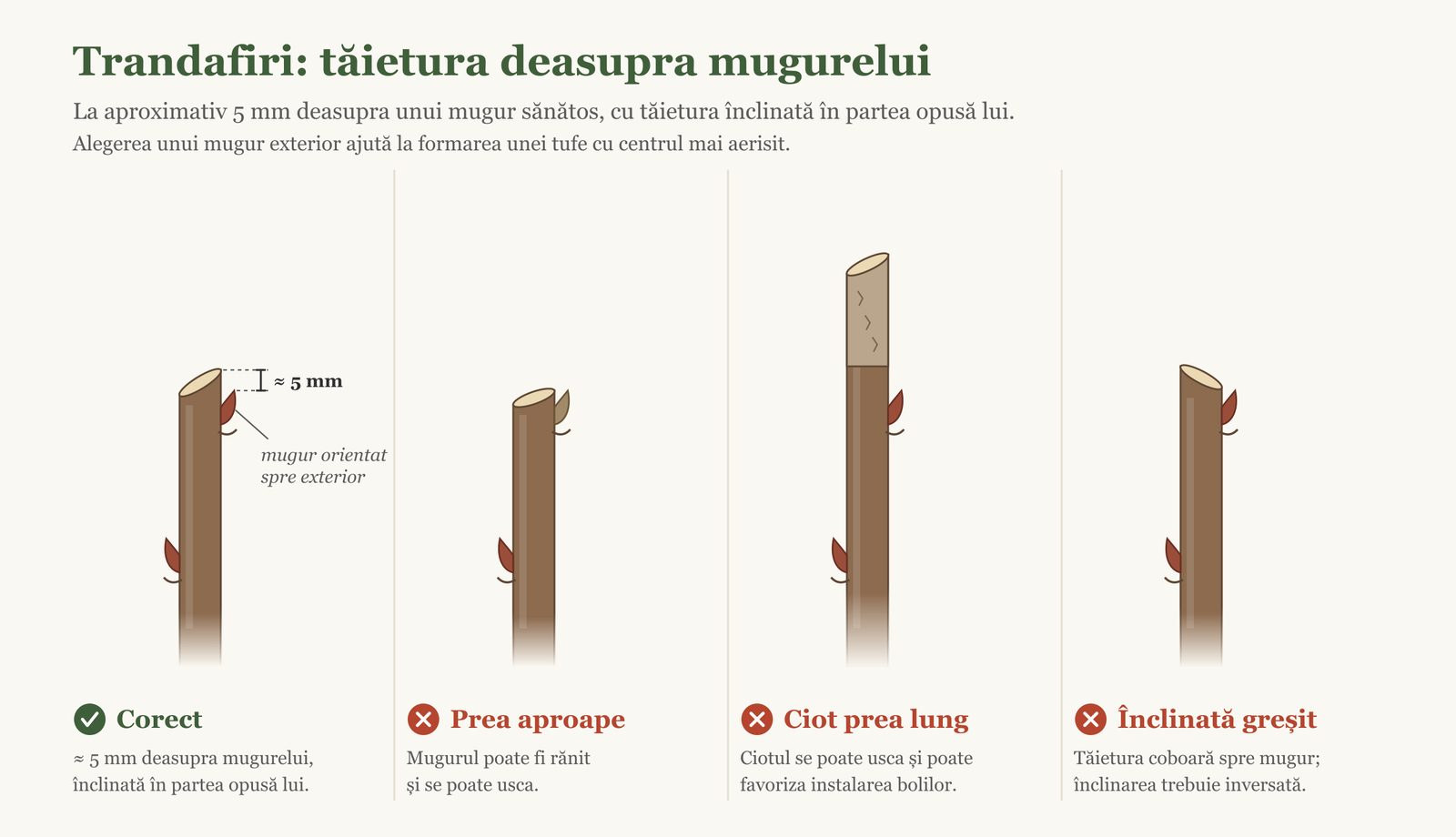
When I head back, I cut above an outward-facing bud, a few millimeters above it, with the cut slightly angled. The shoot that grows from the bud then grows outward, not toward the middle of the bush, where it would cross the others. A stub left too long dries out and becomes a gateway for disease. [1]
Not all plants are pruned in winter
Late winter and early spring are the usual time for many pruning jobs, but not for all of them. Shrubs that bloom early, like forsythia or lilac, carry their flowers on last year’s wood. For them, the right time comes right after flowering, not before.
Plums, cherries and other stone fruits are better pruned in spring or summer, in dry weather, when wounds close quickly. Pruned in winter, they’re left with open cuts during the very season when silver leaf spreads most easily. [2]
Some plants bleed. Grapevines, birch, maple and walnut, cut when the sap is already running, let clear drops flow from the cuts, sometimes for days. Usually this bleeding doesn’t do them significant harm and doesn’t, on its own, mean the plant is in danger. But the timing differs among them: grapevines are pruned mainly while dormant, and for trees prone to bleeding I choose the window that suits the species. Pruning grapevines after they leaf out doesn’t replace the dormant fruiting pruning. [6][7]
Guides by category
Each group of plants has its own rules. Separate guides are in the works:
Pruning roses → The difference between bush, shrub and climbing roses, and why it matters whether a rose blooms once or several times a year.
Pruning fruit trees — coming soon. Apples and pears on one side, plums and other stone fruits on the other. And why shaping a young tree is nothing like maintaining a mature one.
The hydrangeas in my mountain garden: find out which species you have and what wood it blooms on. The separate pruning guide: Pruning hydrangeas →
Pruning clematis → The three pruning groups, and what to do when the label was lost long ago.
Pruning ornamental shrubs → Bloom time as a first clue, without turning it into a rule with no exceptions.
Tools and clean cuts
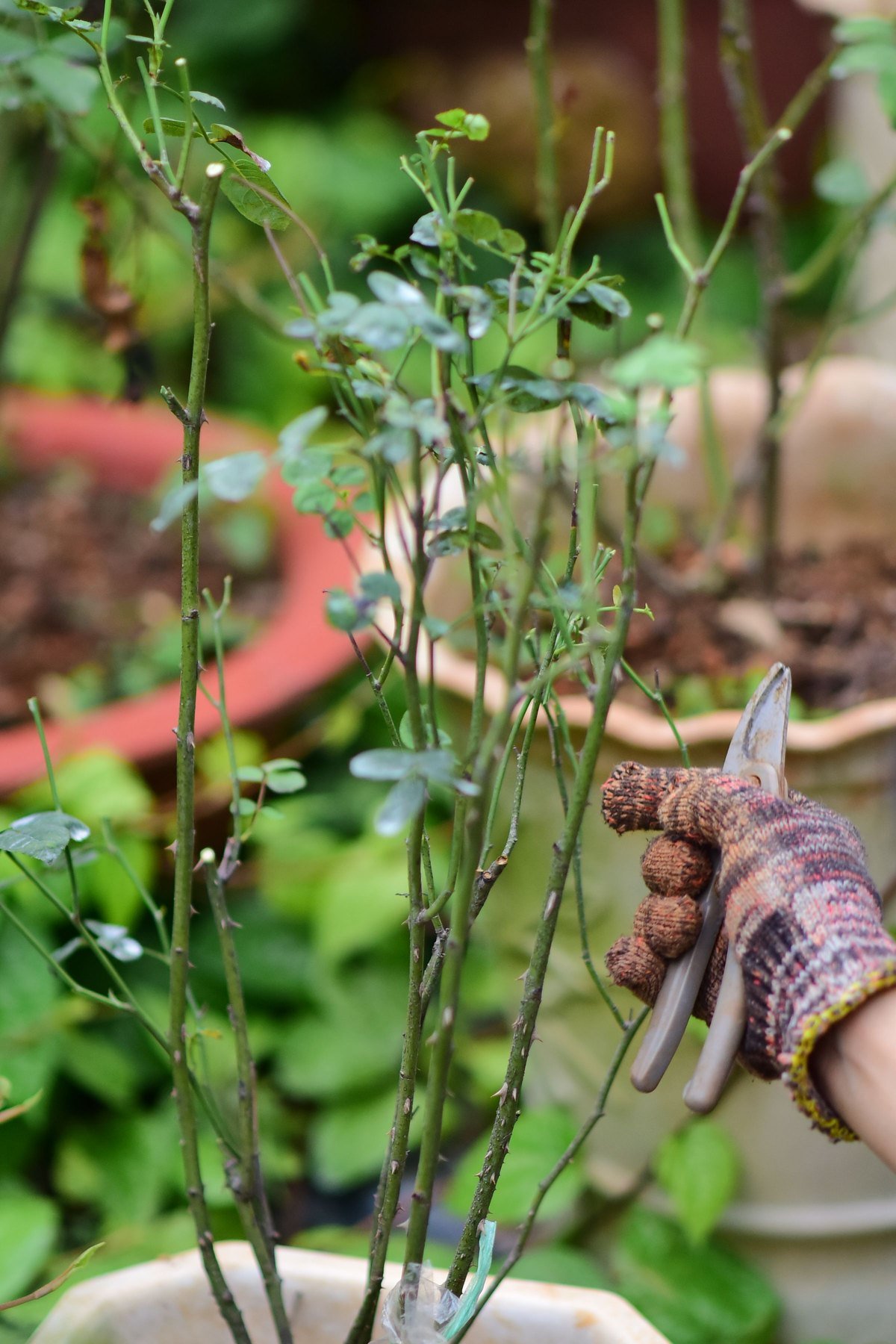
One rule I follow everywhere: clean tools, well sharpened and suited to the thickness of the branch. A smooth cut that doesn’t crush the wood matters more than how fast I finish the bush.
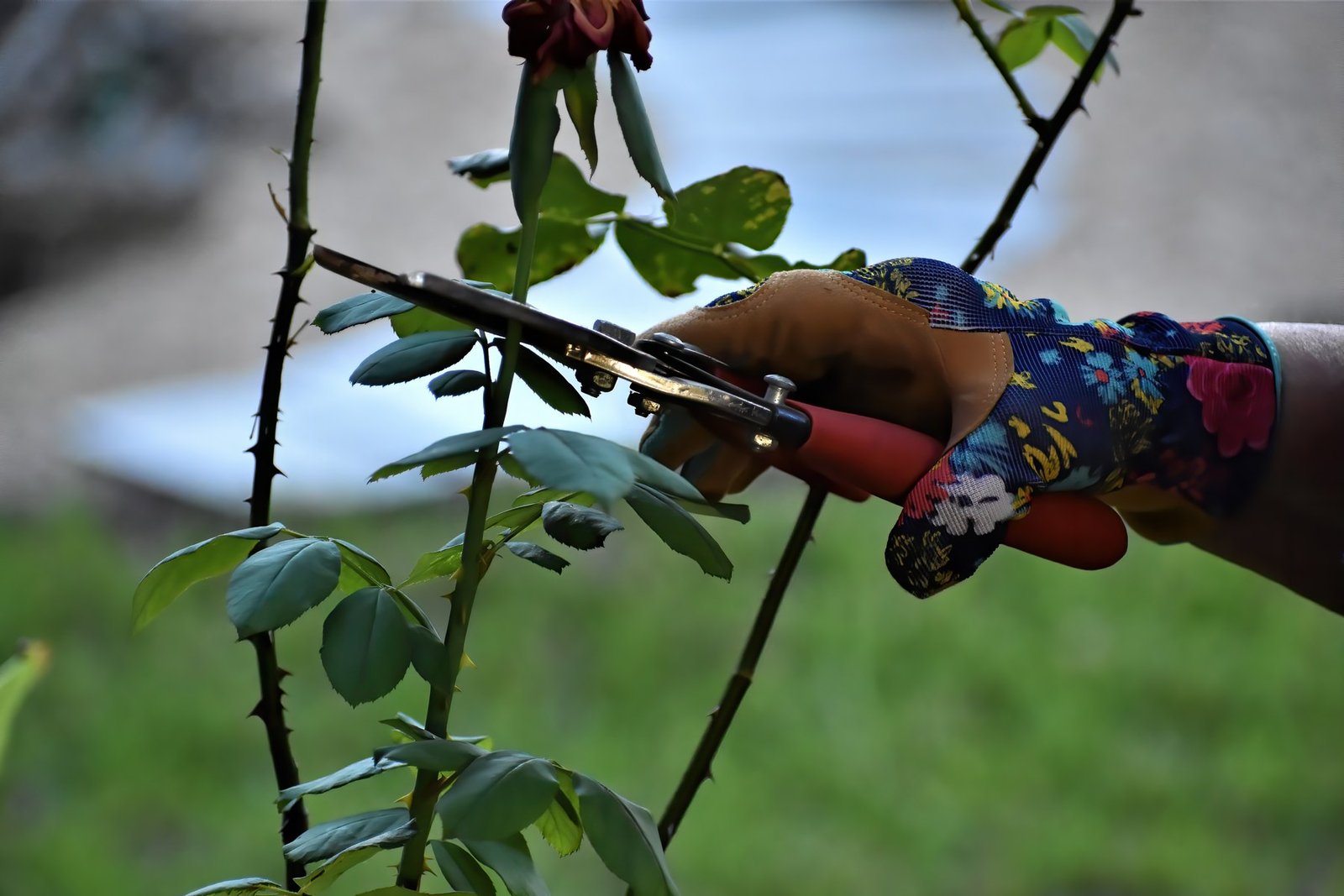
For live wood I prefer bypass pruners, which cut like sewing scissors. Anvil pruners, with a single blade pressing onto a plate, crush live tissue more easily and are better suited to dead wood. For branches thicker than my thumb I use loppers, and beyond what they can handle, a saw. Small pruners forced onto a thick branch don’t cut; they tear.
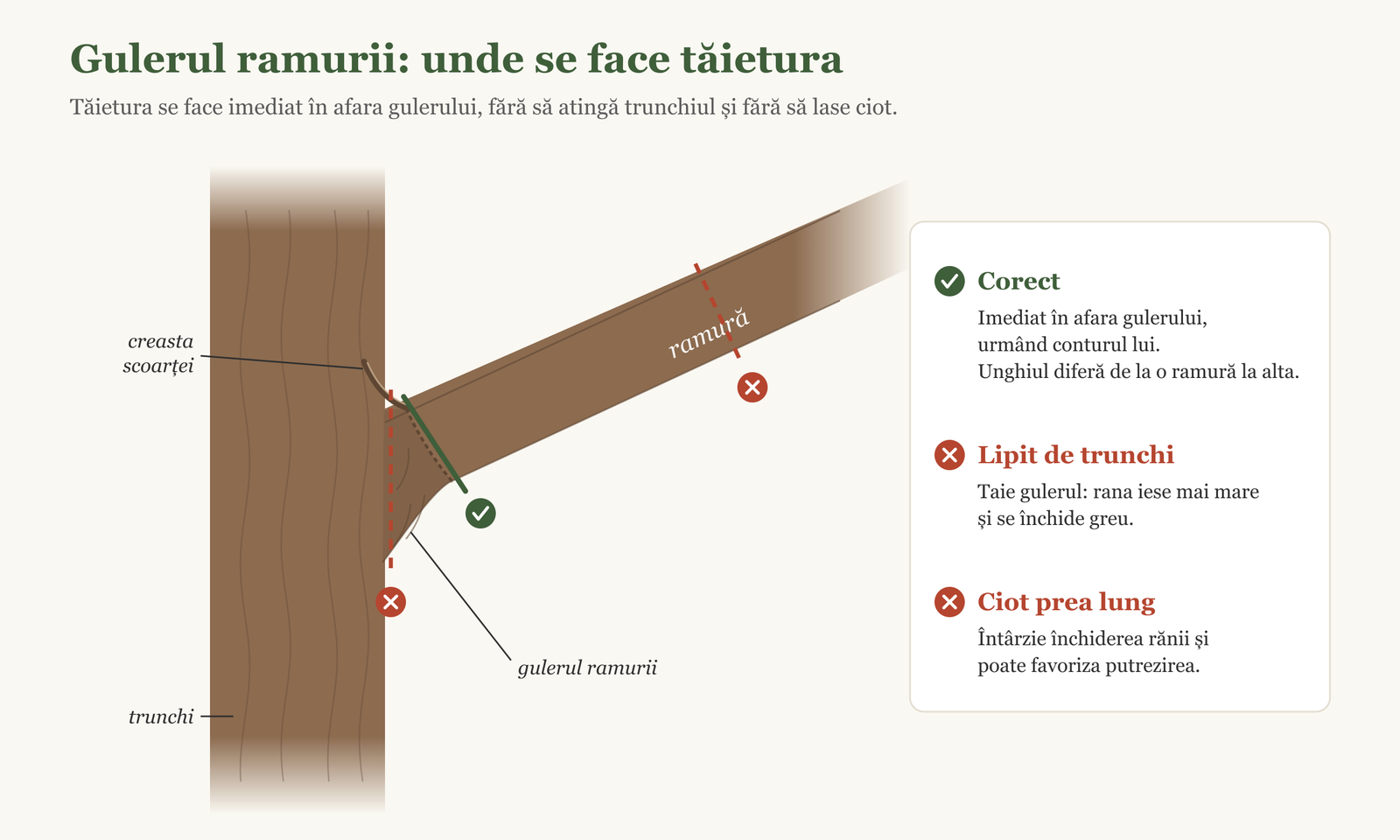
When I remove a tree branch, I keep the branch collar, that small swelling at its base, and I don’t cut flush with the trunk. The tissue that closes the wound grows from the collar. [1]
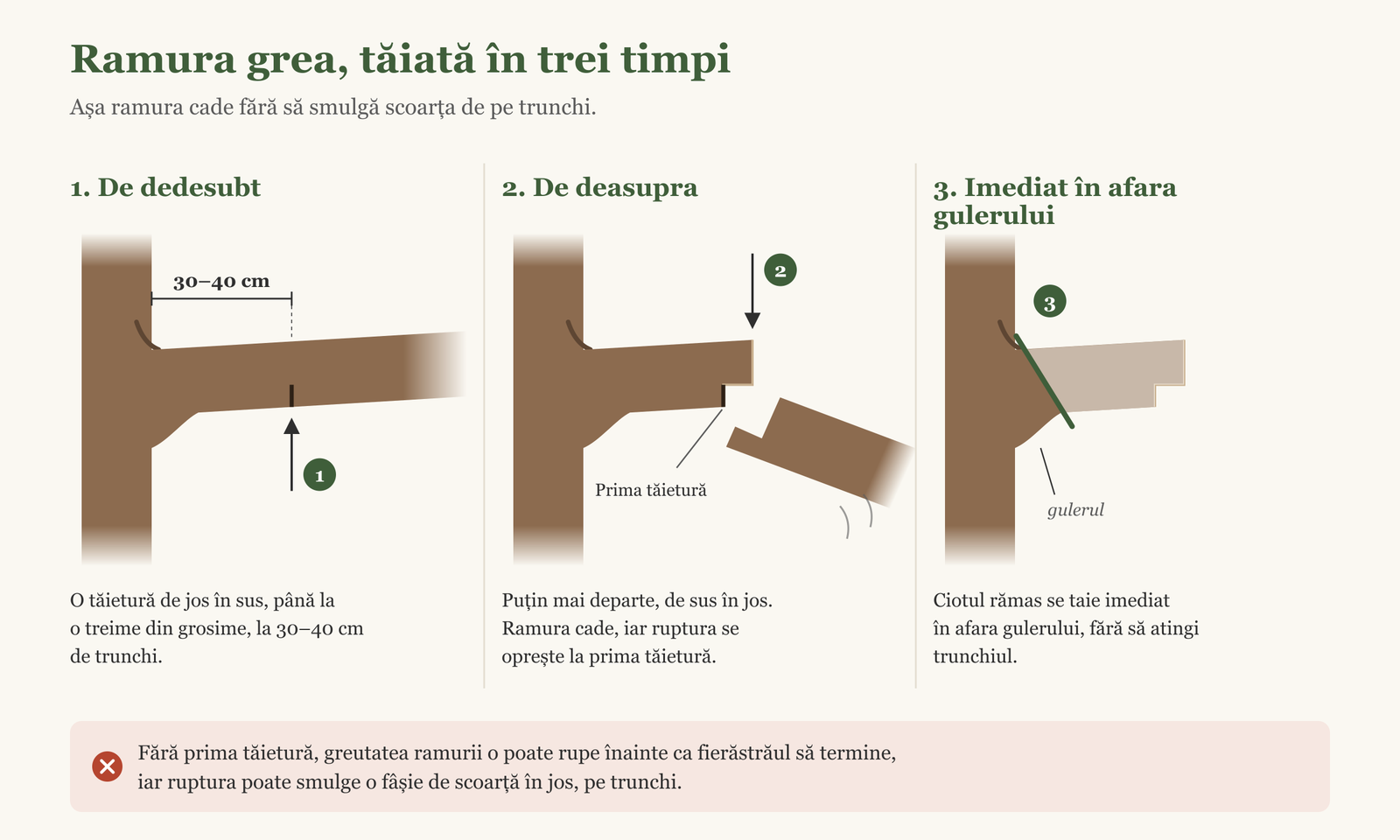
A heavy branch isn’t cut in a single stroke. The first cut is made on the underside, 30–40 centimeters (12–16 in) from the trunk; the second, on top, a little farther out, so the branch falls without tearing the bark. Only the third, next to the collar, is the final cut. [1]
Pruning sealers and wound paints are no longer routinely recommended. A clean cut, made in the right place, closes on its own; a coating over it can trap moisture and disease inside instead of keeping them out. [1]
First, dead, diseased or broken wood
The first step, before any nice shape: I remove dry, broken or diseased branches. After snowy winters the list is long, because wet snow snaps branches the wind would never have touched. Next come branches that cross and rub against each other: wounded bark is an open door for disease.
Even here I don’t work mechanically. The symptoms and the species may call for a particular time or method. Between a suspect plant and a healthy one, I wipe the blade with alcohol; otherwise the pruners carry the disease along with every cut.
When it’s better to call someone
For large branches or work at height, getting help from a specialist is a natural choice, not a defeat. The goal is for the plant to stay healthy and for me to work safely, not to do every job myself. A ladder leaning against a tree and a heavy branch that falls differently than you expected is a combination not worth trying.
After pruning
A pruned plant doesn’t automatically need a big dose of fertilizer. Especially in late summer and fall, extra food pushes soft shoots that go into winter unhardened. I watch how the plant responds and adjust care to the species, the soil and the weather.
Its response shows in the shoots. Lots of straight, vigorous shoots, growing like whips from the same spot, say the pruning was too hard; on fruit trees they’re called water sprouts and are thinned out in summer. A few balanced, well-spaced shoots say the cut suited the plant. That’s how I learn not just how much a plant can take, but how much it really benefits.
A living garden refuses the rigid geometry of hedges trimmed to a line. The real art of pruning lies in stepping in without erasing each plant’s character and freedom to grow.
At a glance: when I prune
General guidelines, adapted to the species, variety, training form and the weather in the garden. Sources for the table: [1]–[7].
| Plants | Flowers or fruit appear on | When I prune | Watch out |
|---|---|---|---|
| Forsythia, lilac | Wood formed in the previous season | After flowering | Pruning before flowering removes the flower buds. |
| Hydrangea paniculata and H. arborescens | The current year’s growth | In late winter or early spring, without hard frost | How hard depends on the variety and the structure of the bush. |
| Hydrangea macrophylla | Usually last year’s wood; reblooming varieties on new wood too | Spring: old flowers back to the first pair of healthy buds; dead wood after identification | I don’t cut back evenly; I can thin a few old stems at the base. |
| Repeat-flowering bush roses | The season’s new shoots | In spring, after the hard frosts, when the buds start to grow | The main pruning is adapted to the group and vigor. |
| Repeat-flowering climbing roses | New shoots on the side branches of the framework | Toward the end of dormancy, in frost-free weather; adapted to the spot | I keep and train the main canes; I shorten the side shoots. |
| Once-flowering roses | Usually side shoots on previously formed wood | After flowering | Cutting back hard before flowering reduces or removes the flowers. |
| Free-standing apple and pear trees | Short fruiting spurs; on some varieties also at the branch tips | While dormant, without frost; selective cuts in summer | I identify the fruiting type; trained forms follow a different pruning regime. |
| Plum and cherry | One-year-old wood and short fruiting spurs, depending on species and variety | In dry weather: spring for shaping; summer for established trees | I avoid pruning in winter, to limit the risk of disease, including silver leaf. |
| Grapevine | The year’s shoots, grown from buds on one-year-old canes | Main pruning while dormant, usually toward the end of winter | I adapt the timing to frost and variety; summer green work is separate. |
| Birch, maple, walnut | That isn’t the pruning criterion | The window varies by species; often after the leaves develop, in summer | I avoid unnecessary cuts. Sap bleeding usually does little harm. |